August 25, 2026
The PEM electrolyzer market entered 2026 in an entirely different gear: orders that once took years to close are now landing within quarters. In Q1 2026 alone, at least five publicly disclosed PEM orders totaling over RMB 120 million and more than 25 MW of electrolysis capacity were awarded in China, while Hyundai Motor committed KRW 9 trillion (about RMB 44.6 billion) to a 200 MW green hydrogen plant in Gunsan, South Korea. Analysts put the global PEM electrolyzer market at roughly USD 1.46 billion in 2026, heading to USD 3.6 billion by 2033 (13.8% CAGR), with industrial-grade PEM growing even faster at 39.85% CAGR toward USD 15 billion by 2032. Cost is the headline story: PEM system prices fell about 20% year-on-year to roughly RMB 3.2 million per MW, and iridium loadings on the anode have dropped to 0.8 mg/cm², directly addressing the technology's historical cost barrier. For manufacturers of hydrogen industry equipment — electrolyzer stack assembly lines, bipolar plate production, and MEA/CCM lamination equipment — the demand signal is unambiguous: capacity must scale with the market.
Data Point | Value | Source |
Global PEM electrolyzer market, 2026 | ~USD 1.46B, reaching USD 3.6B by 2033 (13.8% CAGR) | Coherent Market Insights |
Industrial-grade PEM electrolyzer market | USD 1.45B (2025) → USD 15.17B (2032), 39.85% CAGR | PW Consulting |
China Q1 2026 disclosed PEM orders | 5+ orders, >RMB 120M total, >25.05 MW | GGII / industry press |
PEM system unit price | ~RMB 3.2M per MW, down ~20% vs early 2025 | GGII |
Hyundai green hydrogen plant | KRW 9 trillion (~RMB 44.6B), 200 MW, Gunsan, Korea | Industry press |
China's share of global electrolyzer additions 2026 | 47.6% (8.7 GW of 18.2 GW) | Industry reports |
PEM share of 2026 electrolyzer capacity | ~24.8% (up from ~22% in 2025) | Industry reports |
The defining shift is commercial: PEM moved from demonstration projects to repeatable procurement. In China, large wind-solar-hydrogen integration projects are now the core demand driver. Notable Q1 2026 awards include a RMB 30.88 million order for a 2,000 Nm³/h PEM system (four 500 Nm³/h stacks) for the Lishu green hydrogen-methanol project, a RMB 71 million award for 12 × 250 Nm³/h PEM stacks for a Liaoning wind-hydrogen-methanol project, and the largest domestic order of late 2025 — a RMB 144 million wind-solar-hydrogen package led by Changchun Green Hydrogen. Internationally, Nel ASA won a USD 7 million containerized PEM order, and Hyundai's 200 MW Gunsan plant is the global benchmark for large-scale PEM deployment.
Meanwhile, national champions are building their own PEM supply chains: PetroChina's first MW-class PEM electrolysis system passed CNAS certification in April, Dongfang Electric launched a new 500 Nm³/h PEM stack in March, CNOOC commissioned a MW-class PEM unit with anode iridium loading cut to 0.8 mg/cm² and cathode platinum to 0.3 mg/cm², and CRRC's 500 Nm³/h PEM stack rolled off the line in Zhuzhou.
PEM's historical disadvantage was cost, driven by iridium and platinum catalysts and complex manufacturing. Three forces are now compressing it:
Precious metal reduction — catalyst loadings have fallen sharply (anode iridium to 0.8 mg/cm²), and catalyst-thrifting, thinner coatings, and recycling are mainstream engineering targets.
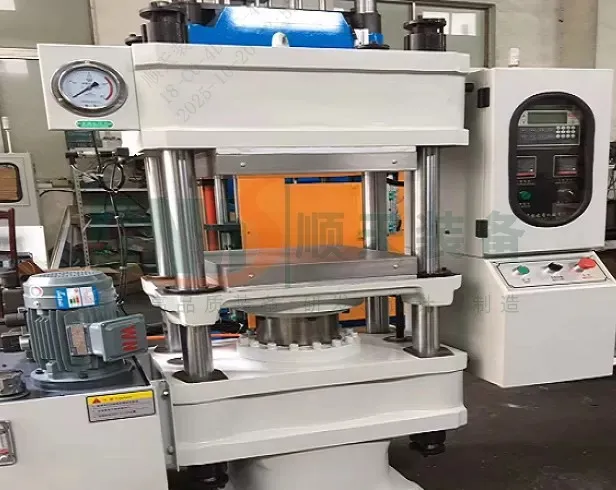
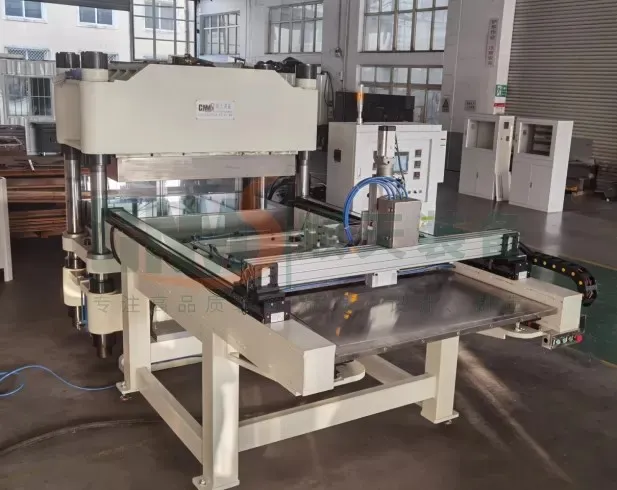
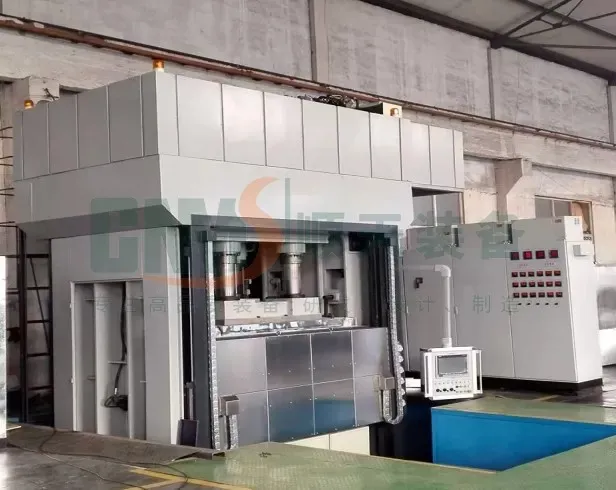
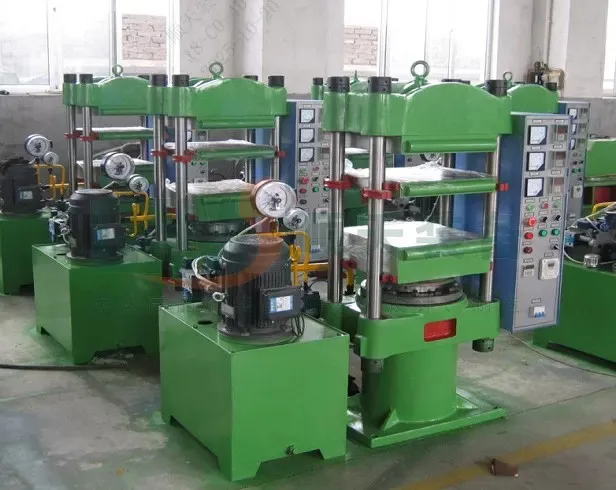
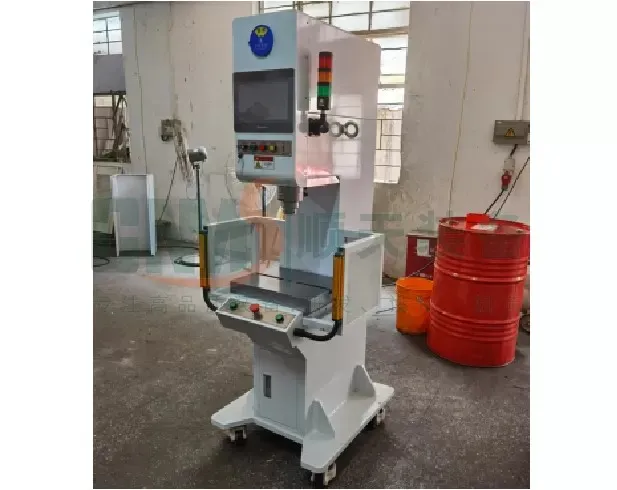
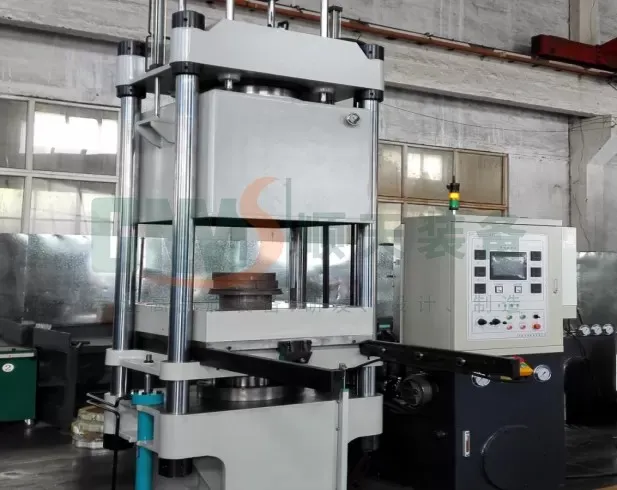
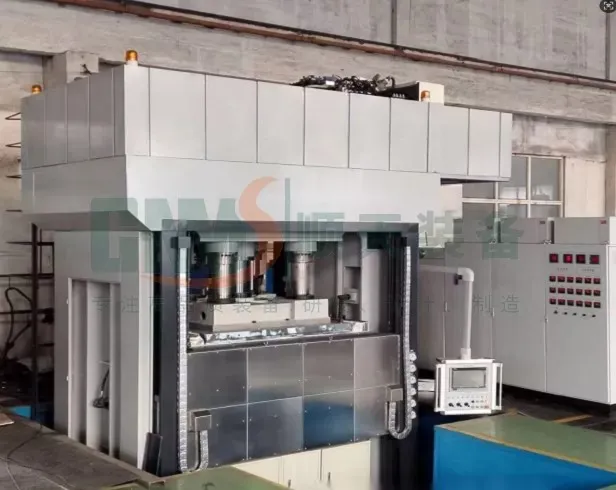
Manufacturing scale — automated stack assembly and bipolar plate lines bring repeatable quality and lower labor cost; this is exactly where equipment makers like Shuntian deliver value through electrolyzer stack assembly presses and metal bipolar plate production lines.
Grid compatibility — PEM's rapid dynamic response matches volatile wind and solar power perfectly, making it the balancing partner in the emerging "alkaline base load + PEM regulator" hybrid architectures now standard in large projects.
The result: PEM system prices fell roughly 20% year-on-year, and full-chain domestic capability — from catalyst and MEA to stack and system integration — is removing the import premium.
Membrane electrode assembly (MEA) — precision lamination and ionomer membrane handling equipment are becoming core differentiators; see Shuntian's CCM lamination and ionomer membrane production lines.
Bipolar plates — automated metal bipolar plate lines cut cost and improve tolerance consistency for high-volume stack production.
Stack assembly — servo-hydraulic presses with precise force and parallelism control dominate PEM stack assembly, ensuring consistent compression across the active area.
Modular platforms — suppliers are standardizing repeatable MW-scale modules rather than engineering each project from scratch, favoring equipment that can scale.
Shuntian's delivery of China's first fully automated PEM electrolyzer production line for a central SOE customer is a working example of this equipment demand in practice.
For hydrogen equipment manufacturers and electrolyzer integrators planning capacity in 2026–2027, the market data points to clear actions:
Plan for scale — with PEM orders compounding and prices falling, production lines must be designed for volume from day one, not retrofitted later.
Invest in automation — stack assembly, bipolar plate, and MEA/CCM lines with high automation and traceability are the competitive differentiators as labor and quality requirements tighten.
Target the cost curve — every 1% improvement in material utilization and yield directly improves stack economics in a price-falling market.
Prepare for hybrid architectures — "ALK + PEM" project designs mean demand for both technology lines, not either/or.
For a technology-level comparison of the two main electrolysis routes, see our PEM vs alkaline electrolyzer analysis.
Shuntian Equipment, founded in 2019 and based in the Greater Bay Area hydrogen industry belt, is a national high-tech and "specialized, refined, distinctive, and innovative" enterprise with 70+ patents and more than 30 years of accumulated equipment manufacturing experience in its core team. The company supplies hydrogen industry equipment, energy storage industry equipment, and aerospace precision presses, including hydrogen fuel cell stack assembly lines, PEM/AEM electrolyzer stack assembly presses, MEA hot presses, bipolar plate production lines, and flow battery production equipment. Reference deliveries include hydrogen fuel cell stack assembly lines and support for China's first fully automated PEM electrolyzer production line for a central SOE, with R&D collaboration with China University of Petroleum and the Guangdong Provincial Key Laboratory of Hydrogen Fuel Cells.
For electrolyzer stack assembly or PEM production line inquiries, contact cwf001@dlcntn.com or rubyzhang@dlcntn.com.
Keywords: PEM electrolyzer market 2026, PEM electrolyzer orders, green hydrogen capacity, electrolyzer stack assembly, PEM production line, PEM cost reduction


 中文
中文