December 12, 2025
Within the electrolyser—the core apparatus for green hydrogen production—the fuel cell stack serves as its very heart, undertaking the critical mission of efficiently converting electrical energy into hydrogen energy. The stack's performance and lifespan are directly determined by the pressing process of hundreds of layers of bipolar plates and membrane electrode assemblies. Only by achieving millimetre-to-micrometre precision control can uniform, stable bonding without residual stress be ensured. This seemingly straightforward ‘lamination’ process is, in reality, an ultimate test of precision, consistency, and controllability. In this challenge, traditional hydraulic presses or mechanical presses have proven inadequate, while servo-hydraulic presses, with their irreplaceable technical advantages, have become the ‘standard equipment’ and ‘guardian’ on modern high-performance electrolyser production lines.
I. The Demanding Requirements of Stack Assembly: Why Conventional Presses Fall Short
The assembly of electrolyser stacks (particularly PEM electrolyser stacks) is not a simple physical stacking operation but a precision systems engineering task. Its core requirements include:
1. Exceptional flatness and uniformity: Surface irregularities on individual bipolar plates must be controlled to the micrometre level, with minimal cumulative error across the entire stack. Any localised pressure imbalance increases contact resistance and disrupts current density distribution, potentially causing localised overheating, efficiency loss, or component damage.
2. Precise compression and rebound control: During assembly, both the membrane electrode assembly (MEA) and the porous transport layer (GDL/PTL) are elastic porous materials requiring compression to a specific ratio (e.g., GDL compression is typically controlled at 15%–30%). This compression must be precisely controlled to achieve an optimal balance between reducing contact resistance and minimising mass transfer resistance, thereby ensuring system performance and durability. Insufficient or excessive compression will degrade performance and shorten lifespan.
3. Highly Consistent Repeatability: Achieving scalable production and ensuring consistent performance across every electrolyser cell requires the pressure-displacement curve of each compression process to be virtually identical.
4. Protection of fragile materials: Membrane electrode assemblies are exceptionally delicate with low shear tolerance. The assembly process must entirely prevent relative slippage or misalignment between components, imposing near-demanding requirements on parallelism and synchronisation control during pressing.
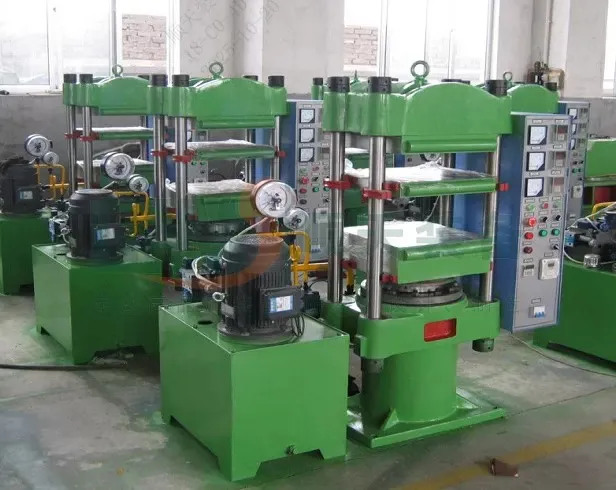
Conventional hydraulic or mechanical presses typically employ constant-speed or on-off control, resulting in low pressure and displacement accuracy. They struggle to achieve precise process curve programming and real-time feedback adjustments, frequently causing overshoot, under-pressure, or uneven loading issues. Consequently, they fail to meet the aforementioned precision assembly requirements.

II. Core Technical Advantages of Servo-Hydraulic Presses: Precise Decoupling, Intelligent Global Control
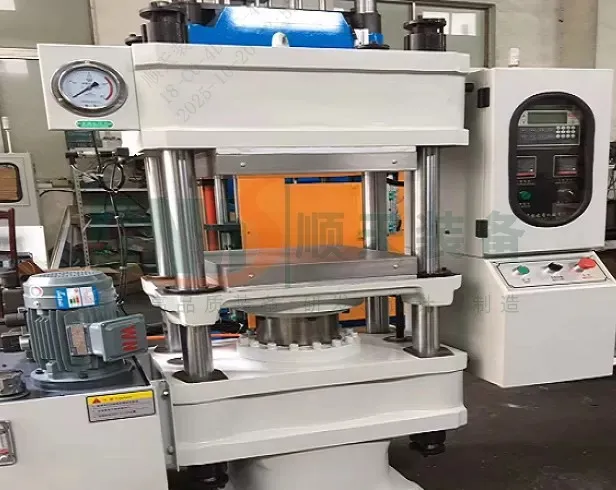
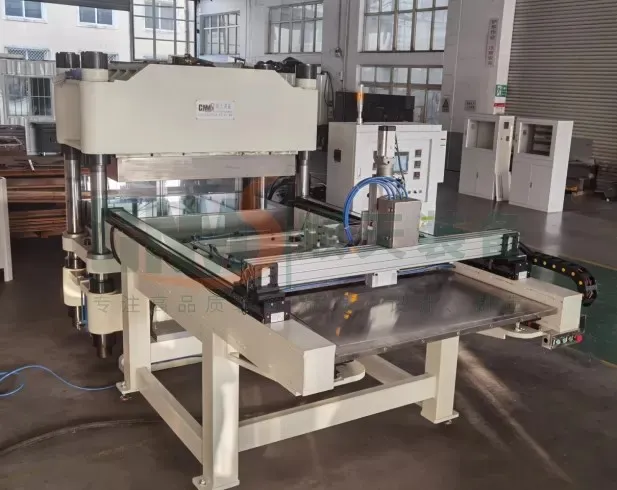
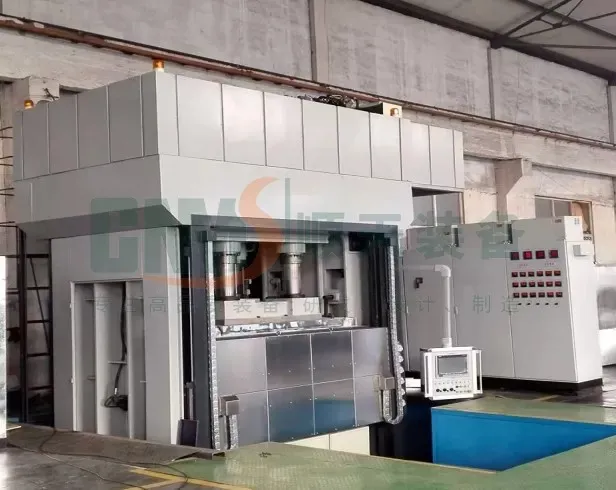
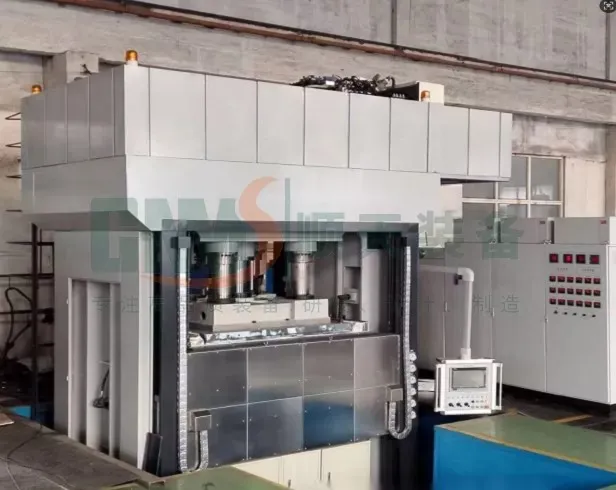
Servo hydraulic presses achieve deep integration of high-performance servo motors, precision hydraulic transmission, and digital control systems. Their core advantages are specifically engineered to address the aforementioned challenges:
1. Full Closed-Loop Precision Control: Achieving Pinpoint Accuracy
Servo hydraulic presses incorporate high-resolution linear encoders (displacement sensors) and pressure sensors to form a fully closed-loop feedback system. The controller continuously compares preset curves with real-time measurements, precisely adjusting hydraulic pump flow and pressure output via the servo motor. This enables independent, accurate, and synchronised control of ram position (displacement) and output force (pressure), elevating control precision from the percentage level of traditional equipment to thousandths or even ten-thousandths of a millimetre.
2. Programmable intelligent press-fit curves confer process flexibility
This represents the servo hydraulic press's core process value. Users can pre-program an optimal three-dimensional ‘pressure-displacement-time’ press-fit curve, akin to writing software. For instance:
● Multi-stage precision positioning: Rapid no-load approach → Low-speed positioning → Multi-stage variable-speed pressing → Precise pressure holding → Smooth return stroke.
● ‘Soft landing’ and anti-impact: Automatically switches to ultra-low speed and pressure as components approach contact, achieving ‘zero-impact’ engagement to protect sensitive parts like membrane electrodes.
● Pressure holding and creep compensation: Maintains prolonged pressure at target position while continuously monitoring pressure variations, automatically applying micro-compensation to counteract creep relaxation in porous materials, ensuring stable final compression.
3. Exceptional Parallelism and Off-Centre Load Control
Advanced servo-hydraulic presses employ multi-cylinder synchronisation technology (e.g., dual servo cylinders or four-corner levelling systems). Through independent closed-loop control of each cylinder, eccentric torque caused by minor thickness variations or placement deviations in components is detected and automatically corrected in real time. This ensures the upper and lower plates remain highly parallel throughout the pressing process, fundamentally eliminating shear forces that could lead to stress concentration and leakage risks within the stack.
4. Full Process Data Traceability and Process Window Definition
Complete data from each pressing cycle (pressure, displacement, time, parallelism) is automatically recorded and stored, precisely linked to the stack serial number to enable full lifecycle quality traceability. Accumulated process data facilitates big data analysis, scientifically defining acceptable ranges for critical parameters such as pressing force and displacement. This establishes a robust data foundation for continuous process optimisation and precise quality control.

III. Transcending “Compression”: The Comprehensive Value Enhancement Delivered by Servo-Hydraulic Presses
The adoption of servo-hydraulic presses yields benefits far exceeding the mere achievement of a single-pass compression:
1. Enhanced Product Performance and Consistency: Uniform contact pressure optimises internal resistance distribution within the stack, directly improving electrolytic efficiency (voltage efficiency) while ensuring high consistency in every unit's performance.
2. Extended Core Component Lifespan: By preventing assembly damage and internal residual stresses, it significantly slows the degradation rate of membrane electrode assemblies and bipolar plates, prolonging stack service life.
3. Reduced production costs: High yield rates minimise rework and scrap losses; precise compression control optimises material usage design for seals and GDLs, eliminating waste from over-engineering.
4. Empowered R&D and rapid iteration: During development, engineers can readily explore how different pressing curves impact performance, swiftly validating and locking in optimal process parameters to accelerate new product development.

As the green hydrogen industry advances towards large-scale, low-cost, high-performance operations, the manufacturing processes for electrolyser cells are accelerating their transformation towards digitalisation, precision engineering, and intelligent upgrades. Servo-hydraulic presses are no longer mere ‘pressure-application devices’; they have evolved into advanced manufacturing units integrating precision execution, intelligent processes, and data acquisition.
By translating engineers' process concepts into digitally encoded instructions that ensure precise replication and stable execution, these machines guarantee the robust integrity of the fuel cell stack – the very heart of the system – from its inception. Consequently, for modern electrolyser manufacturers pursuing high performance, reliability, and scalable production capabilities, investing in servo-hydraulic presses is no longer an optional extra. It has become a strategic imperative to safeguard core product competitiveness and secure future market dominance. What it precisely presses together is not merely the physical structure of the cell stack, but the very cornerstone of quality and industrial advancement in the era of green energy.


 中文
中文