中文
中文 Green hydrogen — produced by splitting water with renewable electricity — is the cornerstone of every major decarbonization strategy worldwide. At the center of this trillion-yuan market sits the PEM (Proton Exchange Membrane) electrolyzer: a device that uses a solid polymer membrane to produce ultra-pure hydrogen at high efficiency, with the fast dynamic response needed to pair with intermittent solar and wind power. But scaling PEM electrolysis from laboratory prototypes to gigawatt-scale industrial production requires a specialized, high-precision manufacturing system — the PEM electrolyzer production line. For hydrogen equipment manufacturers, energy companies, and industrial investors entering this space, understanding the equipment, process, and supplier landscape is the first step toward production at scale.
This guide provides a comprehensive technical overview of PEM electrolyzer production lines in 2026 — the technology, key equipment components, PEM vs alkaline comparison, and how Shuntian Equipment — the company that delivered China's first fully automated PEM electrolyzer production line for a central state-owned power company — is enabling the industrialization of green hydrogen manufacturing.
1. Why PEM Electrolysis Is Winning Green Hydrogen
1.1 The Renewable Coupling Imperative
Green hydrogen's fundamental value proposition — using surplus solar and wind electricity that would otherwise be curtailed to produce storable, transportable hydrogen — requires electrolyzers that can respond to rapidly changing power input. Solar irradiance fluctuates by the minute as clouds pass. Wind speed varies continuously. An electrolyzer designed for steady-state baseload operation — the traditional industrial model — cannot efficiently couple with renewable generation.
PEM electrolysis solves this problem with millisecond-to-second dynamic response. Unlike alkaline electrolysis, which uses a liquid potassium hydroxide electrolyte with significant thermal inertia, the solid polymer membrane in a PEM electrolyzer enables rapid current density changes without performance degradation. This makes PEM the technology of choice for green hydrogen projects directly coupled to renewable generation — which is increasingly the standard project model as the industry scales.
1.2 PEM vs Alkaline: The Technology Decision
| Parameter | PEM Electrolysis | Alkaline Electrolysis |
|---|---|---|
| Electrolyte | Solid polymer membrane (Nafion® or equivalent) | Liquid KOH solution (25-30%) |
| Current Density | 1-3 A/cm² | 0.2-0.4 A/cm² |
| Dynamic Response | Seconds — ideal for renewable coupling | Minutes — designed for steady-state operation |
| Hydrogen Purity | 99.999% (directly usable in fuel cells) | 99.5-99.9% (requires purification for fuel cell use) |
| Operating Temperature | 50-80°C | 60-90°C |
| Stack Lifetime | 50,000-80,000 hours (improving) | 60,000-90,000 hours (mature technology) |
| Capital Cost (Today) | Higher — platinum group metal catalysts | Lower — nickel-based electrodes, mature supply chain |
| Capital Cost (Projected) | Rapidly declining with manufacturing scale | Stable — close to cost floor |
| Production Equipment Complexity | Higher — precision MEA lamination, bipolar plate coating | Lower — mature diaphragm and electrode manufacturing |
Industry Trajectory: The green hydrogen market is approaching a technology inflection point. PEM manufacturing costs are declining rapidly as automated production lines replace laboratory-scale assembly, while alkaline costs have largely plateaued. Most new large-scale green hydrogen projects seeking direct renewable coupling are specifying PEM technology — and the bottleneck to deployment is no longer the electrolyzer design, but the availability of high-throughput, quality-controlled manufacturing equipment.
2. PEM Electrolyzer Production Line: Key Equipment and Process Flow
A complete PEM electrolyzer production line integrates multiple precision manufacturing stations. Understanding each component helps equipment buyers evaluate supplier capability and identify where quality and throughput risks may arise:
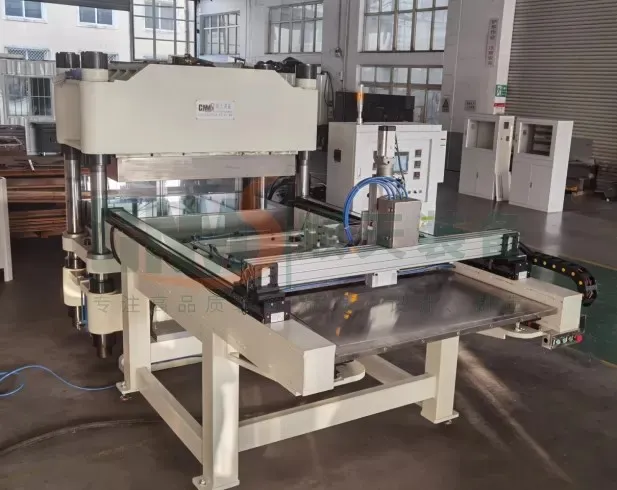
2.1 MEA Hot-Pressing Machine
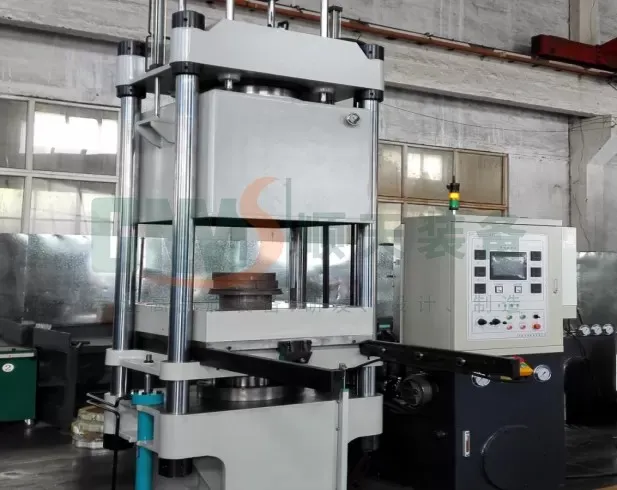
The Membrane Electrode Assembly (MEA) is the heart of the PEM electrolyzer — a multi-layer sandwich of proton exchange membrane, catalyst layers (typically iridium oxide on the anode, platinum on carbon on the cathode), and gas diffusion layers. The MEA hot-pressing machine bonds these layers under precisely controlled temperature, pressure, and time to create a uniform, defect-free interface. Hot-pressing quality directly determines stack performance and lifetime — uneven pressure or temperature during lamination creates hot spots and delamination failure points.
2.2 Bipolar Plate Processing
Bipolar plates — typically titanium with anti-corrosion coatings for the anode side, graphite or coated stainless steel for the cathode — feature machined or stamped flow channels that distribute water to the MEA and collect hydrogen and oxygen. Processing includes forming (stamping or machining), surface treatment (coating or plating for corrosion resistance), and quality inspection (flow channel geometry, coating thickness, leak testing).
2.3 Stack Assembly Station
The automated stack assembly system precisely layers the MEA, bipolar plates, sealing gaskets, current collectors, and end plates in the correct sequence with precise alignment. For large-format stacks (hundreds of cells), manual assembly is impractical — automated systems using vision-guided robotics achieve the repeatability and throughput needed for industrial production.
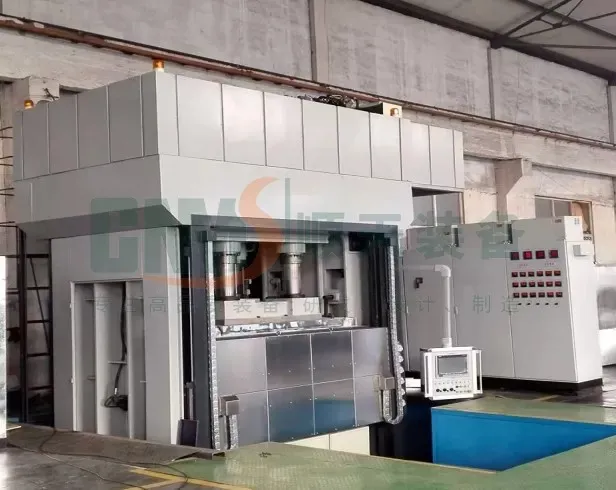
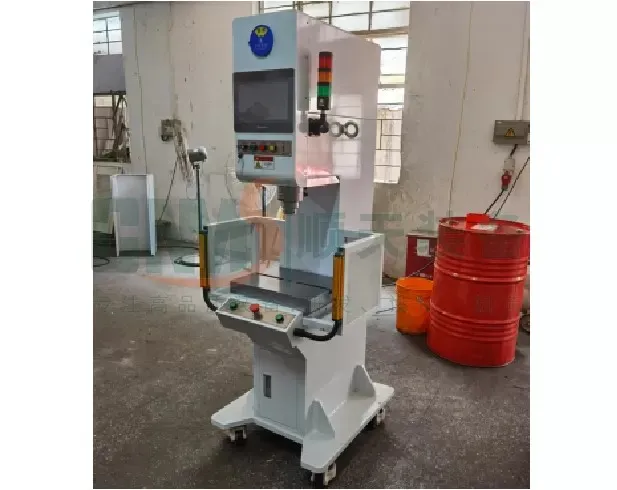
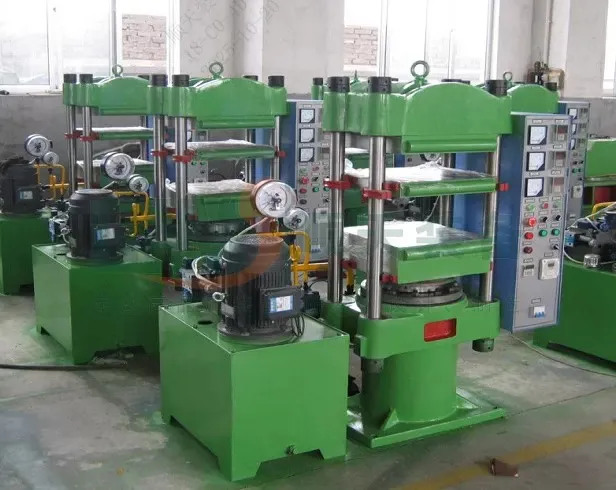
2.4 Stack Compression Press
Once assembled, the stack must be compressed to a specific pressure — typically 1-2 MPa — and held while end plates are secured. Proper compression ensures uniform contact pressure across all cell interfaces; inadequate or uneven compression causes increased internal resistance and reduced efficiency. Shuntian's stack compression presses provide programmable pressure profiles with real-time force monitoring.
2.5 Testing and Quality Control Systems
Completed stacks undergo leak testing (helium or nitrogen tracer gas), electrochemical performance testing (polarization curves, impedance spectroscopy), and visual inspection. For production-scale manufacturing, automated end-of-line test stations with data logging and traceability systems are essential for process control and customer documentation.
2.6 Automated Material Handling
Between processing stations, automated guided vehicles (AGVs), conveyor systems, and robotic pick-and-place units move components through the production sequence — reducing manual handling, contamination risk, and cycle time variability.
3. The Automation Advantage: Why Manual Assembly Cannot Scale
Laboratory-scale PEM electrolyzer assembly — with technicians manually handling MEAs, aligning bipolar plates, and torquing stack bolts — can produce perhaps 10-20 stacks per month. Gigawatt-scale green hydrogen production requires hundreds of stacks per month, with each stack containing 100-300 individual cells. The yield, consistency, and throughput required at this scale can only be achieved with automated production lines.
Shuntian Equipment's delivery of China's first fully automated PEM electrolyzer production line for a central state-owned power company represents the transition from pilot-scale to industrial-scale manufacturing. The key automation benefits include:
Repeatability: Robotic MEA handling and hot-pressing eliminates operator-to-operator variation in lamination quality — the single most critical process step
Throughput: Automated lines operate 24/7 with consistent cycle times, achieving 5-10x the output of manual assembly with equivalent floor space
Quality data: Every process parameter — temperature, pressure, alignment, torque — is digitally recorded per stack, enabling statistical process control and full traceability
Contamination control: Automated handling in cleanroom environments minimizes particulate and chemical contamination of catalyst layers and membranes
Worker safety: Eliminates repetitive manual handling of heavy stack components and exposure to catalyst materials
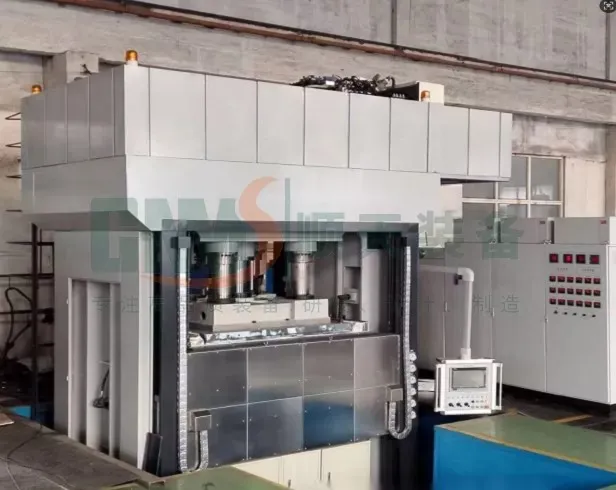
Case Study — China's First Fully Automated PEM Line: Shuntian Equipment delivered a complete PEM electrolyzer production line to a central state-owned power company — integrating MEA hot-pressing, bipolar plate processing, automated stack assembly, compression, and testing systems. This line represents a milestone in China's green hydrogen industrialization and demonstrates Shuntian's capability to deliver turnkey PEM manufacturing solutions from concept to commissioning.
4. Beyond PEM: Shuntian's Full New Energy Equipment Portfolio
Shuntian Equipment's expertise extends across the full new energy manufacturing chain, enabling customers to source multiple production lines from a single engineering partner:
| Sector | Equipment | Applications |
|---|---|---|
| Hydrogen Energy | PEM/AEM electrolyzer production lines, fuel cell stack assembly lines, MEA hot-pressing machines, graphite bipolar plate equipment | Green hydrogen production, fuel cell manufacturing, hydrogen refueling stations |
| Energy Storage | Flow battery channel plate assembly lines, stack pressing lines, capacity container assembly lines | Vanadium redox flow batteries, iron-chromium flow batteries, long-duration energy storage |
| Aerospace | Composite forming presses, hot isostatic presses (HIP), titanium/aluminum alloy hot forming presses | Aircraft structural components, engine parts, satellite structures |
| Other Industries | Precision presses and forming equipment | 5G communications, high-speed rail, automotive, telecommunications |
5. Shuntian Equipment: Intelligent Manufacturing for the Energy Transition
Shuntian Equipment, founded in 2019, is a national high-tech enterprise and specialized innovative enterprise headquartered in the core hydrogen energy industry belt of China's Greater Bay Area. With the mission of "intelligent manufacturing changes the future of energy," Shuntian focuses on providing full industrial chain solutions for new energy equipment to global customers.
What distinguishes Shuntian for PEM electrolyzer manufacturing:
China's first fully automated PEM electrolyzer production line — delivered to a central state-owned power company, demonstrating verified turnkey capability
70+ granted patents — core technologies independently developed, ensuring IP protection for customer production processes
Deep technical partnerships — collaborations with China University of Petroleum (energy storage) and Guangdong Provincial Key Laboratory of Hydrogen Fuel Cells (hydrogen energy)
CNAS-certified quality system — laboratory and quality management meeting international standards
30+ years of accumulated team experience — the core team brings expertise from aerospace and new energy fields
Full hydrogen industry chain capability — from PEM electrolyzer lines to fuel cell stack assembly to MEA processing — one engineering partner for the entire hydrogen manufacturing chain
Proven delivery track record — multiple equipment awards, first-set certifications, and long-term cooperation with listed companies and state-owned enterprises
Scale Your PEM Electrolyzer Production
Contact Shuntian's engineering team with your target production capacity, electrolyzer specifications, and automation requirements. We provide a customized PEM production line proposal including equipment configuration, factory layout, and investment analysis.
Email cwf001@dlcntn.comAlso: rubyzhang@dlcntn.com | Greater Bay Area, China | 70+ Patents | CNAS Certified
6. Frequently Asked Questions
Conclusion
The green hydrogen industry is at a critical junction. Electrolyzer technology has been proven. Government policies — China's hydrogen strategy, EU's REPowerEU, the US Inflation Reduction Act — have created unprecedented demand pull. The remaining bottleneck is manufacturing capacity: the specialized production equipment that scales PEM electrolysis from hundreds of megawatts to tens of gigawatts annually.
Shuntian Equipment, with China's first fully automated PEM electrolyzer production line delivered and operating, 70+ independently developed patents, CNAS-certified quality systems, and deep technical partnerships with leading university and provincial laboratories, is positioned at the center of this industrial scaling challenge. For electrolyzer manufacturers, energy companies, and industrial investors entering green hydrogen production, the manufacturing equipment partner is the single most important supplier relationship — and Shuntian's verified delivery capability, full-chain product portfolio, and commitment to intelligent manufacturing make the case for partnership compelling.
Start Your Green Hydrogen Manufacturing Journey
Contact Shuntian for PEM electrolyzer production line specifications, capacity analysis, and a customized proposal. 70+ patents, CNAS certified, China's first fully automated PEM line — delivered and operating.
Email cwf001@dlcntn.comCC: rubyzhang@dlcntn.com | Greater Bay Area, China | PEM · Fuel Cell · Flow Battery · Aerospace