December 05, 2025
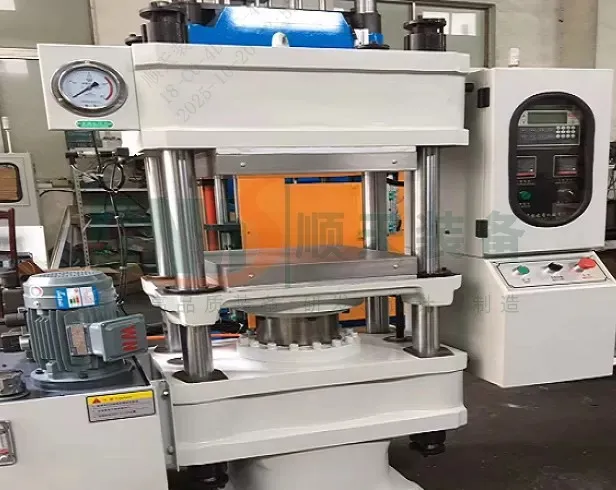
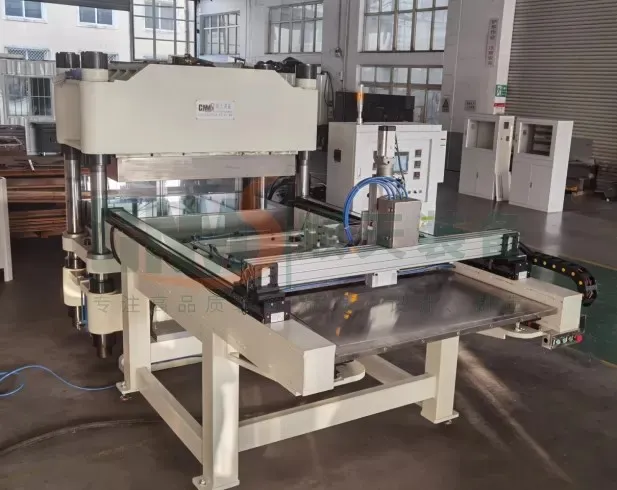
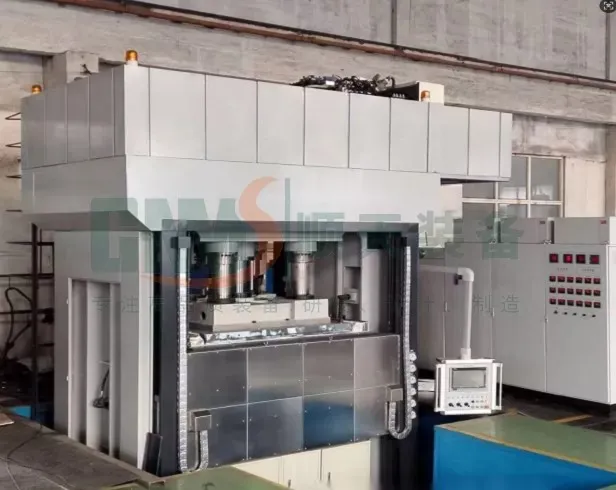
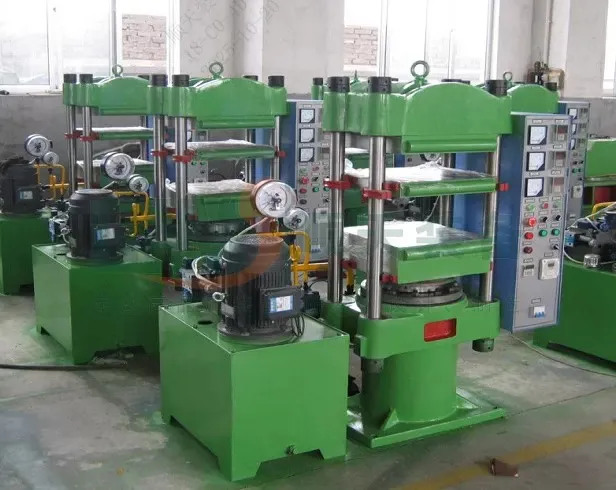
The laboratory wishes to purchase a small-tonnage servo-controlled hot press moulding machine, but the bewildering array of specifications leaves one wondering: how on earth should one choose? This is a common dilemma faced by many researchers and procurement managers. With equipment ranging from tens of thousands to hundreds of thousands of pounds on the market, selecting the right one can become a powerful research tool, while choosing poorly risks acquiring nothing more than a space-consuming piece of scrap metal.
Before delving into complex technical specifications, follow this four-step selection method. Starting from your actual experimental requirements, systematically clarify the key factors to identify the ideal equipment that aligns perfectly with your research objectives.
Step One: Define Requirements by Asking Yourself Four Key Questions
Selecting equipment begins not with examining products, but with questioning yourself.
1. What materials will I primarily process?
This determines the core configuration of the equipment.
● Polymers/composites (e.g., PEEK, carbon fibre prepregs): Focus on maximum temperature (typically requiring 350°C+) and temperature uniformity (ideally within ±2°C).
● Flexible materials/encapsulation (e.g., silicone pads, circuit boards): Prioritise pressure control accuracy (requiring ≥0.5% FS) and platform parallelism.
● Powder materials (e.g., ceramics, metal powders): Focus on pressure tonnage (sufficient to achieve high density) and high-temperature resistance design.
● General-purpose/shared across multiple research groups: Select models with a wide temperature range, balanced functionality, and user-friendly operation.
2.What is the typical size of my samples?
This determines the equipment's table dimensions and tonnage. (Golden rule: The table surface should extend at least 5-10 centimetres beyond the largest dimension of your largest sample or mould to ensure uniform heating and compression.)
●Benchtop models (<10 tonnes): Suitable for samples under Φ100mm, ideal for preliminary experiments, teaching, and micro-components.
●Vertical models (10-30 tonnes): The mainstream laboratory choice, capable of handling most composite panels and standard test specimens.
●If primarily performing ‘hot-press sintering’, higher tonnage requirements apply compared to standard ‘hot-press forming’.

3. Do I require high standards for data logging and process repeatability?
This determines whether you need the Basic or Smart version.
● If experiments demand strict process reproducibility to support academic papers or mass production → You must select a model that is programmable, capable of storing process curves, and able to export process data.
● For preliminary exploratory or qualitative experiments → A basic model with digital displays for pressure, temperature, and time control may suffice.
4. What is my budget?
Establish a reasonable budget range to avoid indecision.
● Economy Class (<¥100,000): Provides fundamental hot-press functionality with simplified controls, suitable for undergraduate teaching or initial exploration with limited budgets.
● Mainstream research-grade (¥100,000–250,000): Features servo/electric precision control, robust temperature regulation, and programmable functionality. The preferred choice for most university laboratories and R&D centres.
● High-end customised (¥250,000+): Incorporates vacuum environments, extended temperature/pressure ranges, and enhanced automation with data acquisition capabilities.

Step Two: Understanding the Three Core Parameters (Focus on the Essentials)
Setting aside complex marketing claims, firmly grasp these three points:
1. Temperature System: Uniformity Matters More Than Peak Temperature
Beware: Manufacturers may advertise ‘maximum temperature 500°C’ without mentioning uniformity. If the centre of the workbench reaches 500°C while the edges only hit 450°C, your sample performance will vary dramatically.
Ask: ‘What is the temperature uniformity across the XXX area of the work surface at XXX°C?’ (±3°C is a favourable laboratory-grade standard)
2. Pressure Control System: Precision and Type are Key
● Hydraulic: Lower cost, but inferior control precision and stability, with potential oil contamination risks.
● Servo-Electric/Servo-Hydraulic: The laboratory preferred. Offers precise pressure control, adjustable speed, clean operation, and energy efficiency, particularly suited for research requiring precise pressure profiles.
● Key parameters: Pressure accuracy (±0.5% FS is optimal), displacement resolution (0.01mm), presence of ‘soft landing’ function (to prevent crushing brittle samples).
3. Operation and Safety: Simplifying Research Workflows
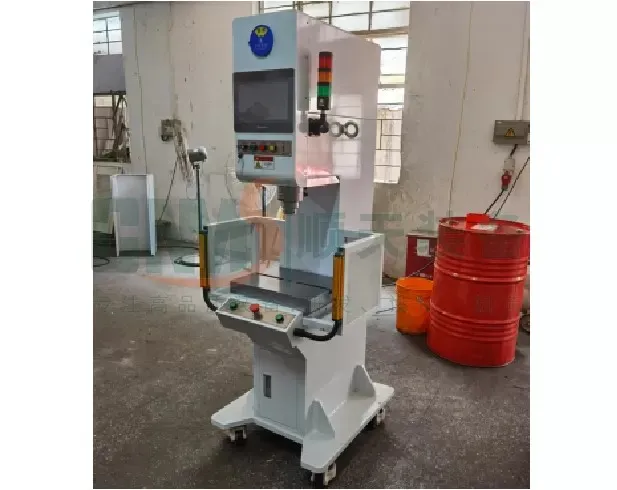
●Human-machine interface: Colour touchscreen, Chinese menus, intuitive curve configuration interface significantly reduce learning curves and operational errors.
●Safety design: Dual-button activation, safety light curtains/enclosures, automatic over-temperature/over-pressure protection, emergency stop switch – all essential features.
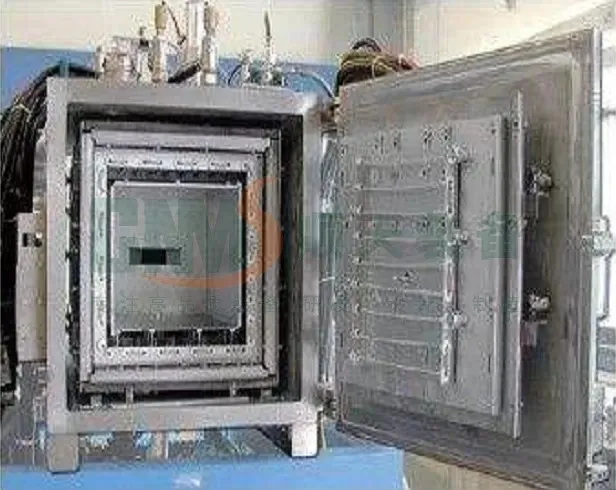
●Expandability: Does it feature reserved data interfaces? Can vacuum chambers or atmosphere protection systems be retrofitted?

Step Three: Avoiding Two Common Pitfalls (Rational Decision-Making)
Pitfall One: ‘Bigger is Better’
Excessively large tonnage may prove disproportionate for compact samples, hindering precise low-pressure control while incurring higher costs and occupying more space. Matching requirements to needs is paramount.
Misconception 2: ‘More Features Are Better’
Paying for ‘luxury features’ you'll never use is wasteful. Define core requirements and allocate funds where it matters most (e.g., superior temperature control or pressure accuracy).
Step Four: Assessing the Supplier's Hidden Value (Long-Term Considerations)
A piece of equipment will serve you for many years; a supplier's value extends far beyond delivery.
● Technical Support & Training: Can they provide comprehensive operational and maintenance training? Are clear Chinese manuals available?
● Application Support Capability: Does the supplier understand your research field? Can they offer preliminary process parameter recommendations? This reveals whether they are genuine partners or mere equipment peddlers.
● After-Sales Service Network: How responsive are they? Are maintenance engineers competent? Is spare parts supply reliable?
● User Case Studies: Are there successful implementations at comparable universities or research institutes? Can references be provided?
Selecting a small servo hot press for your laboratory fundamentally involves choosing a dependable ‘research partner’. It should precisely execute your concepts, consistently deliver reliable data, and evolve alongside your research projects. Require tailored selection advice for your specific research direction? We welcome your enquiry.


 中文
中文