December 16, 2025
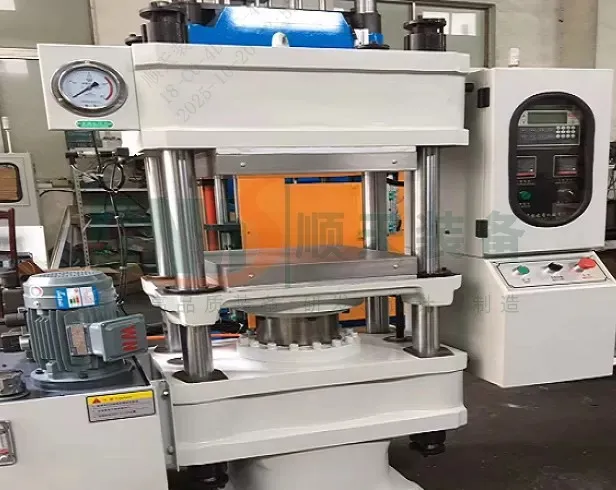
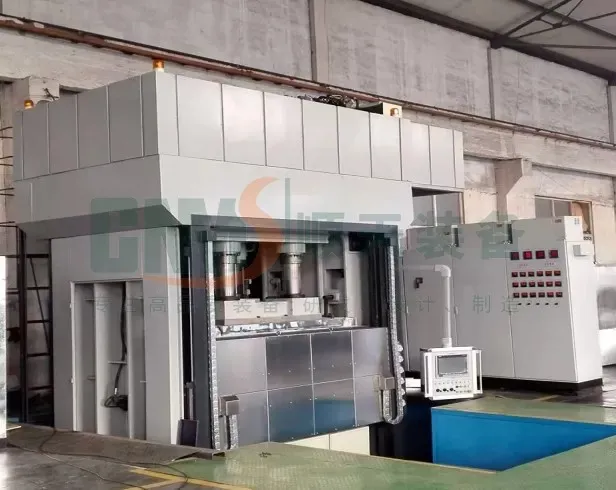
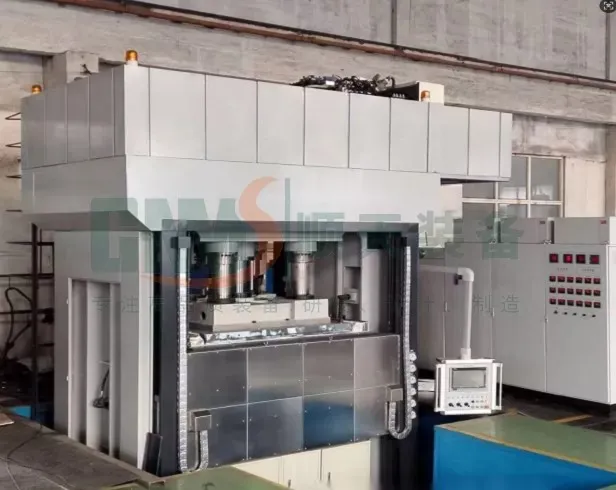
Proton exchange membrane electrode assemblies (MEAs) serve as critical components within fuel cells, with their performance directly impacting the efficiency and overall lifespan of the fuel cell. In the process of scaling up and achieving high-performance manufacturing of MEAs, bespoke servo-controlled hot-pressing machines for MEAs are emerging as pivotal equipment for overcoming process bottlenecks and enhancing product consistency within the industry. For fuel cell enterprises seeking technological advancement and differentiated competitive advantages, gaining a thorough understanding of the value offered by such high-end customised equipment is paramount.
Why Standard Hot Presses Fail to Meet High-End MEA Manufacturing Demands
Traditional or standard hot press equipment frequently encounters multiple limitations when addressing cutting-edge MEA research and manufacturing:
1. Insufficient process flexibility hinders adaptation to complex R&D systems: Different MEA types (e.g., CCM, GDE), substrate materials, or catalyst formulations exhibit extreme sensitivity and variability in requirements for process parameters such as temperature curves, pressure accuracy, and pressure holding time. Standard equipment typically offers fixed or limited process windows, lacking the flexibility to respond to the demands of multi-variety, small-batch cutting-edge R&D and customised production.
2. Control precision and stability limitations: MEAs require uniform, precise hot-pressing conditions. Even minor temperature fluctuations or pressure deviations can cause catalyst layer structural inhomogeneity or substandard porosity, impairing gas mass transfer and proton conduction.
3. Production efficiency and automation bottlenecks: High-end manufacturing trends towards continuous, fully automated production lines. Standard equipment often struggles to seamlessly integrate upstream and downstream automated feeding, alignment, inspection, and handling processes, constraining production cadence and large-scale manufacturing.
4. Difficulties in data traceability: Conventional equipment lacks comprehensive, high-precision monitoring and recording of critical parameters throughout each hot-pressing cycle, hindering process optimisation and quality traceability.
This is precisely where bespoke, custom-designed MEA servo hot-pressing machines demonstrate their irreplaceable value.

Core Advantages and Value of Custom-Built MEA Servo Hot Press Moulding Machines
A custom-built MEA servo hot press moulding machine is not merely a piece of equipment, but a comprehensive process solution designed to empower your operations. Its core advantages and value are manifested in the following aspects:
1. Exceptional Process Compatibility and Flexibility
● Precise Reproduction of Ideal Processes: Tailor-made temperature-pressure-time synergistic control curves for your specific MEA material systems and structural designs, ensuring exact process replication.
● Adaptability to R&D Iterations: Modular design facilitates flexible replacement of platen dimensions, heating methods (e.g., infrared, thermal fluid), or pressurisation mechanisms, effortlessly accommodating future R&D and prototyping requirements for novel materials and products.
2. Precision Control and Consistency Beyond Standards
● Full-Servo High-Precision Pressure Control: Utilising high-performance servo motors and pressure sensors, achieving millinewton-level pressure control and ultra-high repeatability, ensuring uniform and consistent pressure application across every MEA.
● Multi-zone independent high-precision temperature control: Upper and lower heating plates support multi-zone independent closed-loop temperature regulation with accuracy within ±0.5°C. This effectively eliminates temperature gradients within the hot-pressing plane, guaranteeing highly uniform performance across the active regions of membrane electrodes.
3. Deep Integration and Intelligent Empowerment
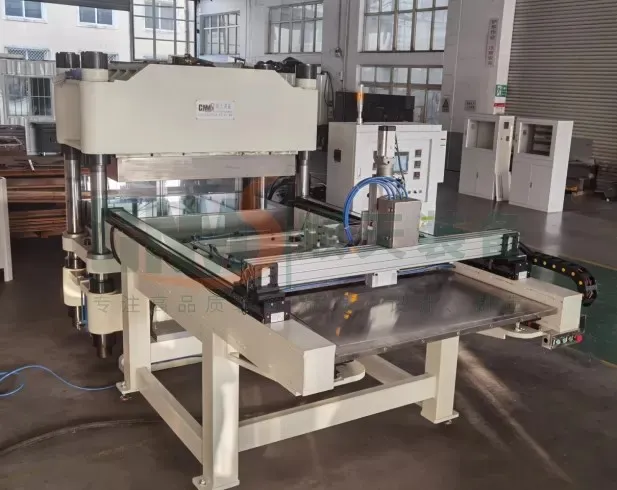
● Seamless integration with automated production lines: Customisable integration with vision alignment systems, robotic arm interfaces, vacuum degassing units, or membrane tension control systems enables fully automated, clean production from substrate to finished product.
● Full lifecycle management of process data: Equipped with a high-specification data acquisition system, it records and stores real-time process parameters for each MEA during production. This provides a robust data foundation for constructing digital twins, optimising processes, and achieving full traceability throughout the production chain.

Key Customisation Dimensions Explained: How Your Equipment is Tailor-Made
When selecting or customising equipment, focus on these deeply customisable dimensions:
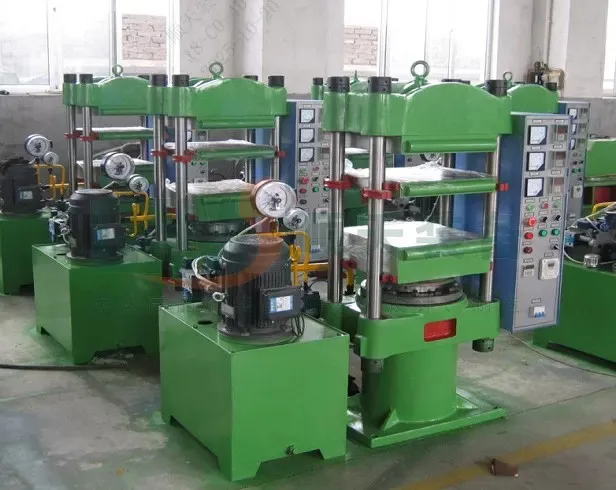
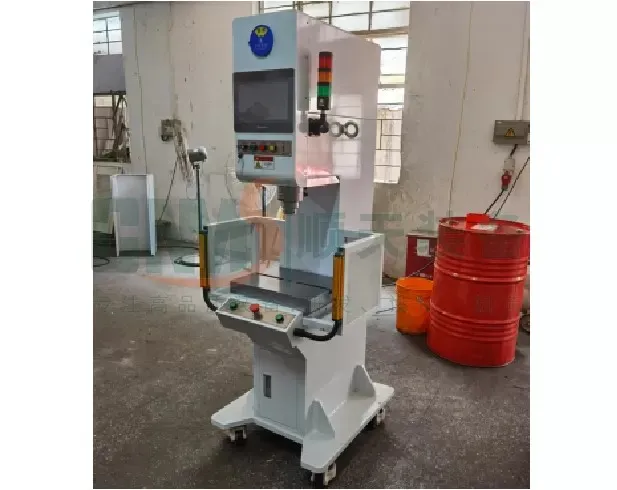
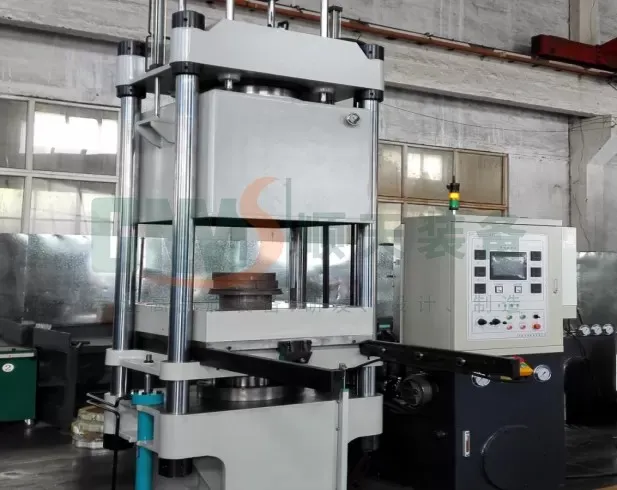
1. Press Structure and Tonnage: Tailor four-column, frame, or C-frame configurations to your production capacity (single-sheet or stacked) and pressure requirements, with nominal pressures ranging from several tonnes to hundreds of tonnes.
2. Heating Platform and Temperature Control: The heating platform dimensions precisely match your maximum MEA size, with the option to divide into independent temperature control zones to compensate for edge heat loss. This achieves an exceptionally uniform temperature field, ensuring highly consistent thermal processing results for every product.
3. Pressure Control and Application Method: Select the optimal pressurisation mode (e.g., flat pressure, buffered progressive pressurisation) and determine whether top-down, bottom-up, or dual-action operation best suits material properties.
4. Automation and Auxiliary Functions: Integrate auxiliary modules including automated loading/unloading, plasma treatment, in-line thickness measurement, and vacuum encapsulation. Create a highly integrated intelligent workstation to substantially enhance efficiency, consistency, and product value.
5. Software and Control Systems: Configure a dedicated human-machine interface (HMI) with preset process recipes, enabling one-touch operation, access control, and comprehensive production data traceability. This ensures controllable processes, verifiable quality, and visualised management.

Application Scenarios: Who Most Requires Custom-Built Servo Hot Press Machines?
1. Fuel Cell Stack and System Manufacturers: Pursuing in-house production of high-performance, highly consistent MEAs to break free from external supply chain constraints and establish autonomous manufacturing capabilities for core components.
2. Specialised MEA Suppliers: Facing flexible production demands from multiple clients and diverse product lines, requiring precision-controlled process equipment to enhance product competitiveness and enter high-end markets.
3. Leading research institutes and universities: Conducting R&D on advanced materials (e.g., ultrathin proton exchange membranes, novel catalysts) necessitates research-grade equipment capable of achieving complex, precise, and repeatable hot-pressing conditions.
4. Start-ups pursuing process breakthroughs: Possessing proprietary MEA structures or process routes, they must rely on customised equipment to translate laboratory achievements into stable, reliable mass-produced products.
Key Considerations for Selecting a Professional Customisation Partner
Successfully customising an MEA hot press machine to meet future development needs for years ahead hinges equally on choosing the right partner and technical approach:
1. Deep Technical Expertise: Assess the supplier's solid experience in precision press-fitting and thermal processing of materials, particularly with proven, reliable customisation cases in fuel cells or new energy sectors.
2. Interdisciplinary Collaboration Capabilities: An excellent supplier should comprehend your material and process requirements, possessing cross-disciplinary design capabilities spanning mechanical, electrical, thermal engineering, software, and electrochemistry.
3. Comprehensive After-Sales and Upgrade Support: Confirm their ability to provide ongoing process support, software upgrades, and future equipment retrofitting to adapt to technological advancements.
As the fuel cell industry advances towards a critical phase of scaling up while pursuing low-cost and high-performance solutions, bespoke MEA servo hot-pressing machines have evolved from ‘optional equipment’ to ‘essential investments’ for high-end manufacturing. They represent not merely critical production assets, but strategic assets that embody core manufacturing processes, drive product innovation, and enable breakthroughs in quality.


 中文
中文