August 14, 2026
The fuel cell stack is the heart of every hydrogen-powered vehicle, stationary generator and maritime power system. Hundreds of thin cells — each a membrane electrode assembly (MEA) sandwiched between bipolar plates — must be assembled and compressed with microscopic precision. One misaligned layer, one uneven compression, one microscopic leak, and the stack's performance and lifetime collapse.
This guide is for buyers who are scaling fuel cell production — a stack manufacturer expanding capacity, an OEM entering hydrogen mobility, or a systems integrator building stationary power. It covers the equipment that makes up a stack assembly line, the process steps that determine quality, and how to select the right manufacturing partner.
A fuel cell stack assembly line converts loose components — MEAs, bipolar plates, gaskets and end plates — into a finished, tested stack. The core process steps are:
MEA preparation and hot pressing — the MEA layers (membrane, catalyst layers, gas diffusion layers) are bonded under controlled heat and pressure to form a single, consistent unit.
Bipolar plate handling — the plates, which distribute gases and conduct current, are inspected, cleaned and positioned precisely.
Cell stacking — MEAs and bipolar plates are layered in exact sequence to build up the stack, with alignment accuracy measured in microns.
Stack compression — the assembled stack is compressed to a precise, uniform pressure to ensure good electrical contact and gas sealing.
Leak and performance testing — the finished stack is tested for gas leakage and electrochemical performance before release.
Each step is a quality control point. Shuntian Equipment designs its hydrogen industry equipment around precision control at every one of these steps.
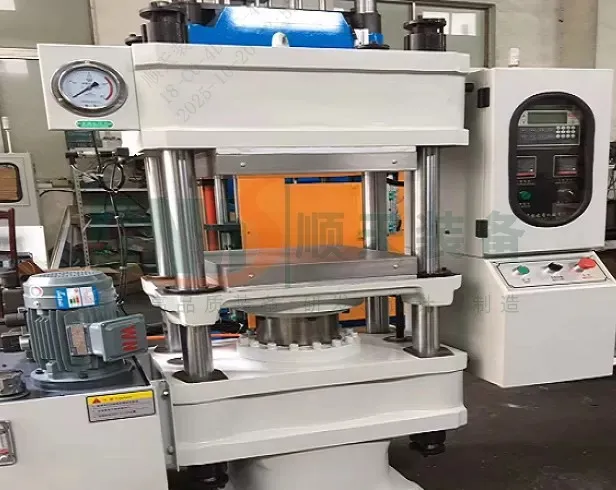
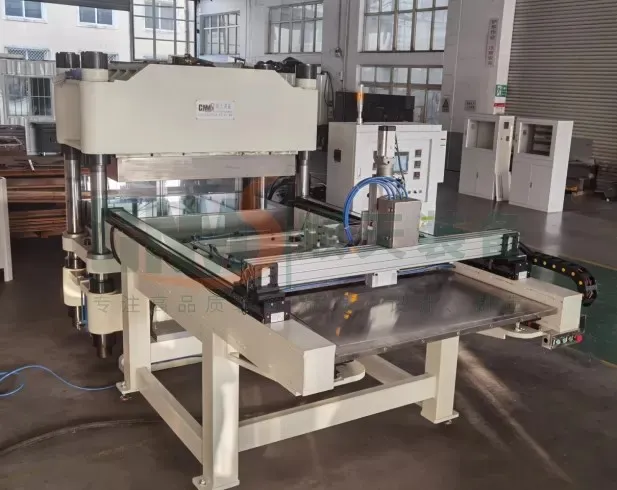
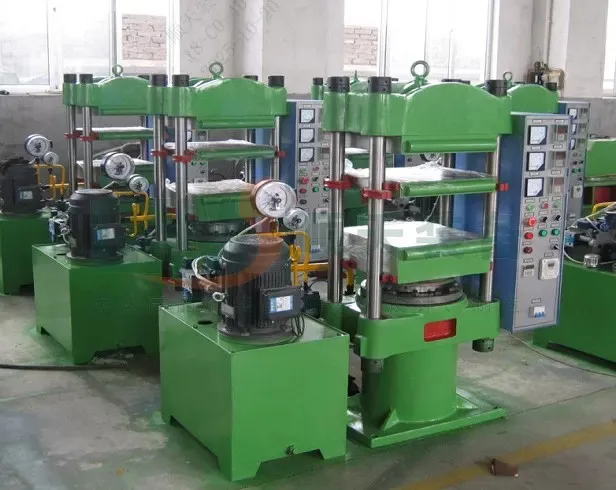
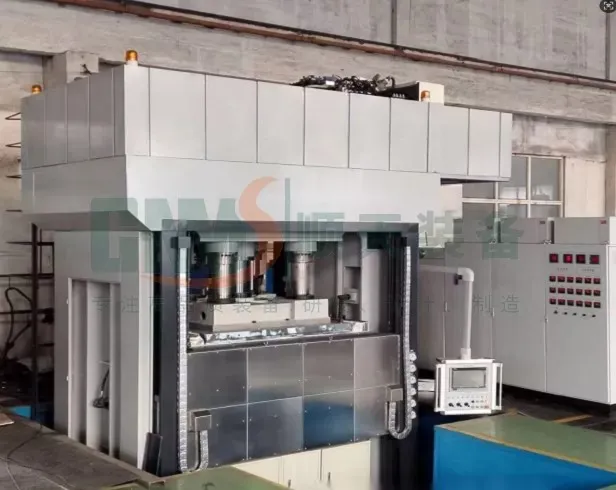
The MEA hot pressing step is the single most influential process for stack performance. It bonds the membrane, catalyst layers and gas diffusion layers into a uniform assembly — and the quality of that bond determines electrochemical efficiency, durability and cell-to-cell consistency.
Key parameters that a hot pressing machine must control precisely:
Temperature uniformity — the entire MEA area must reach the same bonding temperature, or the bond will be inconsistent.
Pressure uniformity — even pressure across the full area prevents localized over- or under-compression.
Alignment accuracy — the layers must be positioned precisely before pressing, since misalignment becomes a permanent defect.
Shuntian Equipment provides MEA hot-pressing solutions engineered for the uniformity that fuel cell stacks demand.
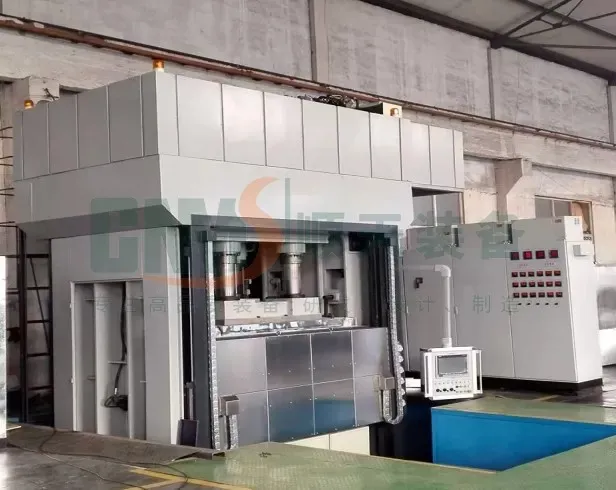
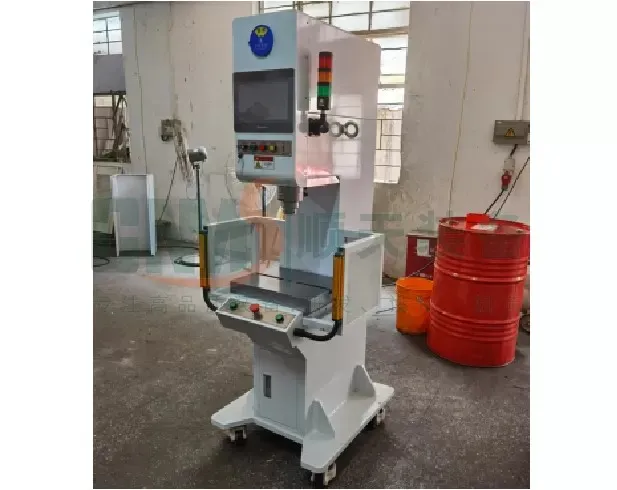
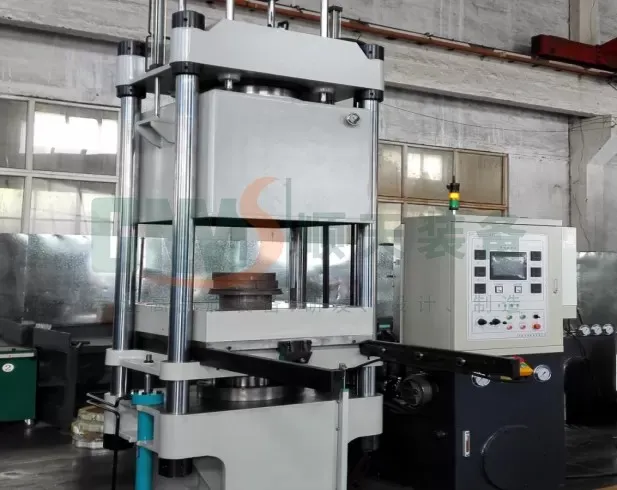
After stacking, the stack must be compressed to a precise, uniform load. Too little pressure causes gas leaks between cells; too much damages the MEAs. The compression step is therefore both a mechanical and a quality-critical operation.
The final gate is testing. A finished stack must pass:
Leak testing — verifies that hydrogen, air and coolant channels are properly sealed, since a leak is both a performance loss and a safety risk.
Performance testing — verifies the stack delivers the expected voltage and power under load, confirming that assembly was correct.
An assembly line that integrates compression and testing as automated, documented steps — rather than manual afterthoughts — is the difference between a stack that ships with confidence and one that fails in the field.
At the decision stage, evaluate fuel cell assembly line suppliers against these six criteria:
Proven delivery record — ask for completed fuel cell stack assembly line projects and references.
Process control precision — confirm temperature and pressure uniformity, and alignment accuracy, across the key steps.
Automation level — verify the line's automation matches your volume and consistency targets.
Customization capability — the supplier must adapt the line to your specific stack design, plate size and production rate.
Integration and testing — confirm the line includes automated compression and leak/performance testing.
Technical partnership — look for a supplier with R&D depth and university or laboratory collaboration that signals long-term support.
Shuntian Equipment, founded in 2019 and headquartered in the Greater Bay Area hydrogen industry belt, is a national high-tech enterprise providing new-energy equipment solutions across the full industry chain. The company brings 30+ years of industry experience, 70+ patents, CNAS certification and a core team with nearly 20 years of aerospace and new-energy expertise.
For hydrogen industry equipment specifically, Shuntian Equipment offers:
Complete fuel cell manufacturing solutions — fuel cell stack assembly, MEA hot pressing, PEM/AEM electrolyzer equipment and graphite bipolar plate equipment.
Proven delivery — a successfully delivered fuel cell stack assembly line, plus China's first fully automatic PEM electrolyzer production line for a central state-owned enterprise.
Technical depth — collaboration with the Guangdong Provincial Hydrogen Fuel Cell Key Laboratory, and a 70+ patent portfolio protecting core technologies.
Send your stack design, plate dimensions, target production rate and current process challenge. Our team will recommend the right fuel cell stack assembly equipment for consistent, high-yield production.
Send your stack design, plate dimensions, target rate and process challenge. Shuntian Equipment will recommend the right assembly equipment.
Email: cwf001@dlcntn.com · rubyzhang@dlcntn.com
A fuel cell stack assembly line typically includes MEA hot pressing, bipolar plate handling, cell stacking, stack compression/pressing, and leak/performance testing stations, all coordinated to produce consistent, leak-free stacks.
MEA hot pressing bonds the membrane electrode assembly layers under controlled heat and pressure, which determines the stack's electrochemical performance, durability and consistency between cells.
Choose a supplier with proven fuel cell delivery experience, precision process control, automation capability and the ability to customize the line to your stack design and production volume.
Yes. Shuntian Equipment has successfully delivered a fuel cell stack assembly line to the hydrogen fuel cell industry.
Yes. Shuntian Equipment provides MEA hot-pressing solutions engineered for the temperature and pressure uniformity that fuel cell stacks require.


 中文
中文