December 29, 2025
In key industries such as modern chemical engineering, metallurgy, and new energy battery manufacturing, the electrolyzer is a critical production unit. Its maintenance efficiency, cleaning quality, and assembly accuracy directly impact overall capacity, product quality, and operational safety. Traditional manual flipping methods are inefficient, unstable, and pose significant safety and equipment-damage risks.
The Electrolyzer Flipping Machine is an intelligent, specialized solution developed to address these precise industry challenges. By utilizing automated, high-precision mechanical operations, it fundamentally transforms electrolyzer maintenance, cleaning, and assembly processes. As a result, it has become essential for enhancing safety, efficiency, and process consistency in modern smart factories.
I. The Electrolyzer Flipping Machine: Definition and Core Capabilities
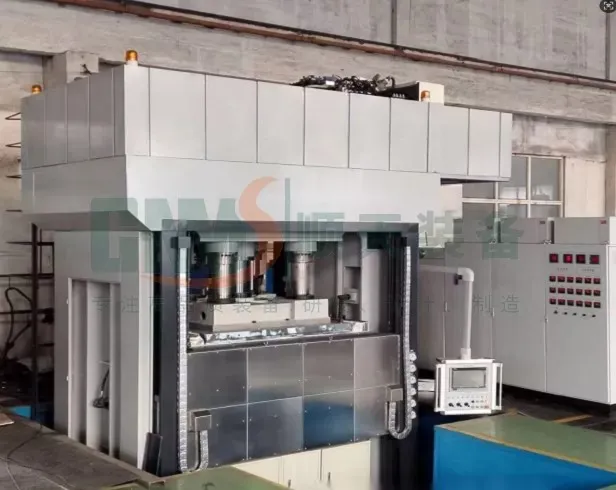
The Electrolyzer Flipping Machine is an industrial device built for safely and precisely turning large electrolyzers. It uses advanced hydraulic or electric control systems, along with intelligent clamps and multiple safety features, to handle electrolyzers of different sizes and weights. The machine can smoothly flip and position them at any angle between 0° and 180°.
Core Functional Advantages:
●Ultimate Safety Assurance: Completely replaces high-risk manual operations, fundamentally preventing potential personal injuries caused by tank slippage or falls. The machine integrates multiple safety mechanisms such as overload protection, tilt warning, and emergency braking, establishing a reliable operational defense.
●Significant Productivity Gains: Can complete the precise flipping and positioning of multi-ton electrolyzers within minutes, improving the efficiency of maintenance, cleaning, inspection, and assembly tasks by over 300%, enabling a leap forward in production pace.
●Equipment and Product Integrity Protection: Through smooth dynamic control and uniform force distribution, it effectively prevents structural deformation of the electrolyzer, loosening of internal components, or damage to electrode plates, ensuring long-term stable equipment operation and product consistency.
●Intelligent Operation and Traceability: Equipped with a PLC control system and human-machine interface (HMI), it allows for preset flipping programs and operation data logging, meeting the digital management requirements of modern production.

II. Analysis of Diverse Application Scenarios for Electrolyzer Flipping Machines
●In Non-Ferrous Metallurgy: Widely used in the electrolytic refining and deposition processes of metals like copper, zinc, aluminum, and nickel. It facilitates cathode plate replacement, anode slime cleaning, scale removal, and overall maintenance, particularly suited for large prebaked anode electrolyzers. Its precise flipping control significantly reduces production line downtime and enhances operational continuity.
●In New Energy Battery Manufacturing: This equipment has become crucial in the production of lithium-ion batteries, hydrogen fuel cells, and flow batteries. From cell stack assembly and electrolyte filling to leak testing and final product inspection, the flipping machine ensures process precision at multiple stages. Addressing the trend towards larger battery modules, it effectively guarantees assembly consistency and structural safety, aiding in improving battery energy density and overall reliability.
●In Chemical and Environmental Processing: Applied in processes like chlor-alkali production, organic electrosynthesis, electroplating wastewater treatment, and precious metal recovery. It solves challenges in electrode cleaning/regeneration, membrane module replacement, and deposit removal. Its corrosion-resistant design and sealing properties adapt to various chemical environments, improving plant operational efficiency and environmental processing capabilities.
●For R&D and Small-Scale Production: Modular, benchtop small-scale flipping machines provide safe and flexible experimental support for the verification of new electrolyzer designs, material testing, and process optimization, effectively reducing operational risks and equipment investment during the R&D phase.
III. Selection Guide and Key Considerations for Electrolyzer Flipping Machines
To ensure the Electrolyzer Flipping Machine precisely matches your production needs, selection should involve a comprehensive evaluation of technical parameters, process compatibility, and overall cost-effectiveness.Key Selection Factors:
●Load and Specification Compatibility: Select a model based on the maximum electrolyzer weight (common range 1-50 tons, special requirements can exceed 100 tons) and dimensions, while also considering compatibility between the tank's center of gravity and the machine's clamping point distribution.
●Flipping Precision and Angle Control: Define required positioning accuracy (typically within ±0.5°) and flipping angle range (e.g., fixed 90°, 135°, 180°, or support for stepless continuous flipping) based on process requirements.
●Drive System Technology Choice: Hydraulic drives are suitable for heavy-load, high-torque scenarios, offering strong stability. Electric servo drives are ideal for high-precision, clean environments, providing fast control response. Hybrid systems combine the advantages of both, adapting to complex conditions.
●Safety Protection Level: The equipment must include multiple protection mechanisms: mechanical limits, hydraulic locks, electrical interlocks, anti-tilt sensors, and emergency braking systems to ensure safe and reliable operation.
●Automation and Intelligence Level: Key evaluation points include the PLC control system brand, HMI functionality, operational data acquisition capability, and integration support with MES/ERP production management systems.
●Environmental Adaptability and Special Requirements: Confirm the need for specialized configurations based on the application environment, such as explosion-proof rating (e.g., Ex d IIB T4), corrosion protection (stainless steel, special coatings), and cleanroom compatibility.
●Energy Efficiency and Economic Analysis: Conduct a full lifecycle cost analysis by comprehensively evaluating energy consumption, maintenance intervals, cost of consumable parts replacement, and long-term operational efficiency.

IV. Technological Development Trends and Innovation Directions
●Deep Integration of Intelligence: Incorporates machine vision for automatic electrolyzer model and pose recognition; utilizes IoT technology for remote monitoring, predictive maintenance, and online fault diagnosis; integrates AI algorithms to dynamically optimize flipping paths and energy consumption strategies.
●Green and Energy-Saving Innovations: Adopts regenerative hydraulic systems for efficient potential energy recovery during flipping; promotes high-efficiency permanent magnet synchronous motor drives; systematically reduces equipment weight and operational energy consumption through structural optimization and lightweight design.
●Modular and Flexible Design: Based on standardized interfaces and adjustable components, enables single machines to widely adapt to multiple electrolyzer specifications; develops quick-changeover systems to drastically reduce production line switchover and retrofit times, enhancing overall equipment utilization.
●Human-Robot Collaboration and Enhanced Safety: Introduces collaborative robotics for human-robot co-operation; builds active obstacle avoidance and intelligent warning systems through multi-sensor fusion; applies digital twin technology for virtual commissioning and safety operation simulation.
●Material and Manufacturing Process Advancements: Employs high-strength lightweight composite materials and additive manufacturing to produce superior complex structural parts; develops special coatings and surface treatment technologies for extreme chemical environments, improving equipment durability and adaptability.
Amidst the wave of Industry 4.0 and smart manufacturing transformation, the Electrolyzer Flipping Machine has evolved from a single-function device into a key piece of equipment for enhancing enterprise production efficiency and safety standards. It is not merely a technical solution to traditional operational challenges but a vital support for enterprises striving towards lean operations, intrinsic safety, and sustainable development. With continuous technological progress and expanding application scenarios, intelligent, flexible, and green flipping solutions will create value for more industries.
For enterprises currently undergoing capacity upgrades, technological renovations, or planning new production lines, proactively adopting advanced automated electrolyzer handling systems is a crucial step in building future competitiveness. Partnering with professional and reliable equipment suppliers to customize flipping solutions tailored to specific process characteristics can not only solve immediate production issues but also lay a solid technological foundation for long-term business growth.


 中文
中文