December 24, 2025
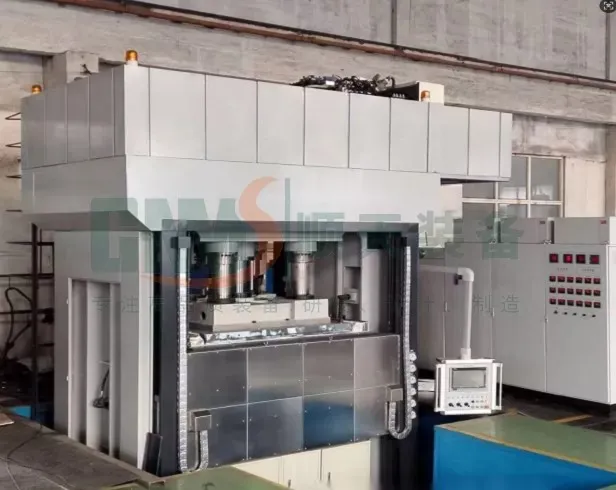
In the field of fuel cell manufacturing, stack assembly is a critical process that determines product performance, lifespan, and safety. With the rapid development of fuel cell technology and the acceleration of commercialization, traditional assembly methods are facing unprecedented precision challenges. Against this backdrop, electric servo presses for stack assembly, with their outstanding performance, are rapidly becoming a transformative force in stack assembly processes, driving the entire industry toward higher efficiency and greater reliability. This article will delve into the unique advantages of electric servo presses in stack assembly and analyze how they enhance production efficiency and product quality.
The Six Core Advantages of Electric Servo Presses in Stack Assembly
1. Precision Force Control: The Core Guarantee for Micron-Level Pressing
The closed-loop control system of electric servo presses serves as the technical foundation for achieving high-precision and repeatable pressing processes. By enabling real-time monitoring and dynamic adjustment of pressure and displacement, this system provides a level of control accuracy that traditional methods struggle to match:
● High-Precision Force Value Control: The servo system achieves pressure control accuracy as high as ±0.5% FS, ensuring that each single cell is assembled under the optimal pressure designed and verified. This fundamentally guarantees the consistency and stability of the internal contact interfaces within the stack.
● Multi-Axis Synchronization and Balanced Pressing: Advanced multi-axis synchronous control technology ensures uniform pressure distribution across the entire stack plane, effectively eliminating membrane electrode assembly (MEA) wrinkling, deformation, or damage caused by uneven loading. This significantly reduces the risk of early failure due to uneven assembly stress.
● Programmable Flexible Pressure Profiles: Supports fully customizable pressure-displacement-time curves. Process engineers can precisely optimize the process for different stack models and material characteristics (such as GDL compression ratio), minimizing contact resistance and accurately controlling the deformation of sealing components to achieve the optimal balance between performance and reliability.
2. Intelligent Process Monitoring: Data-Driven Quality Closed Loop
● Full-Process Digital Records: The system records multi-dimensional parameters—such as pressure, displacement, and time—in real time, synchronously, and completely during the pressing process for each stack, creating a unique "process fingerprint." This comprehensive data package establishes a lifelong traceable manufacturing record for every stack.
● Real-Time Process Analysis and Active Alerts: Based on predefined process windows, the system performs real-time Statistical Process Control (SPC) analysis, automatically identifying deviations such as abnormal pressure curves or displacement exceeding tolerance limits. Upon detecting potential defects, it can immediately issue alerts or stop the process, preventing the production of batches of defective products and shifting quality control from "post-inspection" to "in-process prevention."
● Full Lifecycle Data Traceability and In-Depth Analysis: All process parameters are stored in association with product serial numbers, enabling seamless traceability. This not only meets stringent quality control requirements but also facilitates big data analysis by correlating process data with stack performance and lifespan test results. This, in turn, guides iterative optimization of process parameters, forming a data-driven closed loop for continuous improvement.

3. High Efficiency, Flexibility, and Stable Production
● Rapid, Seamless Changeover: Switching the pressing process between different stack models can be accomplished within minutes through simple program recall. This "soft changeover" significantly reduces the tooling adjustments and downtime required by traditional methods, perfectly adapting to flexible production needs for high-mix, low-volume batches.
● Superlative Process Consistency: The servo system eliminates traditional interference factors such as hydraulic pressure fluctuations and pneumatic variations, ensuring that every pressing cycle and every stack strictly adheres to the preset ideal parameter profile. This repeatability precision, surpassing manual and conventional electromechanical control, is the cornerstone for guaranteeing high batch-to-bust consistency and achieving standardized mass production.
● Adaptive Environmental and Material Compensation: The system's built-in intelligent algorithms can fine-tune pressing parameters in real-time based on sensor feedback (e.g., temperature) or detection of subtle material batch variations. This dynamic compensation capability makes the process window more robust, insulating final product quality from daily environmental fluctuations or minor changes in material properties.
4. Energy Efficiency, Environmental Friendliness, and Superior Economics
● Significant Energy Savings and Clean Operation: Utilizing direct servo motor drive, power is consumed only during the active pressing motion, with extremely low energy consumption in standby mode. Compared to traditional hydraulic systems, energy consumption can be reduced by 30%-70%, drastically cutting the carbon footprint and aligning with green manufacturing and carbon neutrality goals. Simultaneously, it completely eliminates the risk of hydraulic oil leaks, creating a clean and safe assembly environment for the stack's core components (e.g., MEA), preventing performance degradation or failure caused by oil contamination at the source.
● Low Maintenance and High-Reliability Design: The system omits complex hydraulic units (oil pumps, valves, piping), greatly simplifying its structure. This avoids the costs and hassles of regularly replacing hydraulic oil, filters, and disposing of waste oil, and eradicates system failures and process instabilities caused by oil cleanliness, leaks, and component wear. Daily maintenance workload is minimal, significantly improving overall equipment effectiveness (OEE).
● Lifecycle Cost Advantage: Although the initial investment may be higher, the extremely low energy consumption, near-zero consumable costs, reduced downtime, and higher product yield collectively ensure that the electric servo press can achieve a rapid return on investment. It continues to deliver substantial operational cost savings thereafter, resulting in a total cost of ownership (TCO) far lower than traditional solutions.
5. Building a Multi-Dimensional Active Safety System
● Process Safety and Asset Protection: The system's built-in precise electronic safeguards—such as overload, over-travel, and torque limiting—can intervene in abnormal pressing in real-time. This fundamentally prevents damage to expensive core components (e.g., bipolar plates, MEAs) caused by overpressure or misalignment, protecting critical production assets.
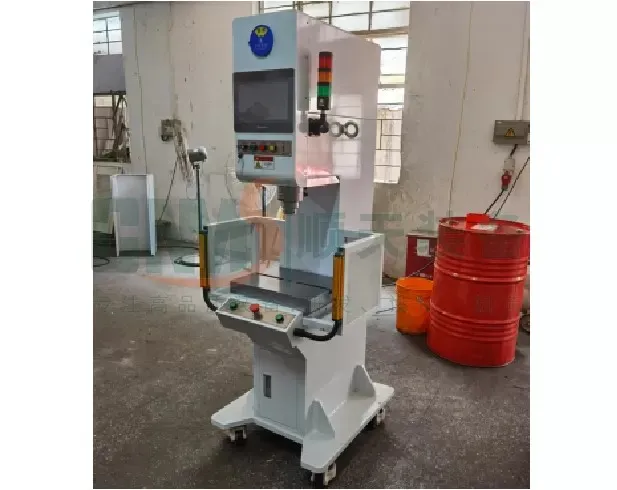
● Operator Safety: Supports integration with safety facilities compliant with the highest safety ratings, including safety light curtains, two-hand controls, and pressure-sensitive edges. These configurations ensure operator protection in both automated production and human-robot collaboration scenarios, meeting the safety standards of modern smart factories.
● System Status Alerting and Predictive Maintenance: The system continuously monitors key status parameters (e.g., temperature, vibration, current) of the servo motor, drive, and transmission mechanisms, enabling predictive maintenance through trend analysis. This not only prevents unexpected failures and unplanned downtime but also elevates safety management from "reactive response" to "proactive prevention," ensuring production continuity and stability.
6. The Intelligent Core and Data Hub for the Future Factory
● Industry 4.0 Ready: Supports standard industrial communication protocols such as OPC UA and MQTT, enabling seamless integration with Manufacturing Execution Systems (MES), Supervisory Control and Data Acquisition (SCADA) systems, and even Enterprise Resource Planning (ERP). This achieves automatic downloading of process parameters, real-time uploading of production data, and transparent visibility of equipment status, completely breaking down information silos from order to product. It is a key component in building a digital workshop.
● Remote Connectivity and Digital Twin Applications: The equipment supports secure remote access and monitoring, allowing experts to perform cross-regional fault diagnosis and program maintenance. Combined with real-time data streams, a "digital twin" model of the equipment can be constructed for predictive maintenance, process simulation, and remote debugging, greatly enhancing service response efficiency and system availability.
● Data-Driven Self-Optimization Closed Loop: As the source of massive process data, pressing data can be correlated with downstream test results (e.g., post-activation performance tests) via big data analytics. Utilizing machine learning algorithms, the system can automatically identify the optimal process window, achieve adaptive adjustment and continuous iteration of pressing parameters, ultimately driving product quality and consistency to new heights.


Application Scenarios: How Electric Servo Presses Optimize Fuel Cell Stack Assembly Processes
● Proton Exchange Membrane Fuel Cell Stack Assembly: Electric servo presses can precisely control the pressing force between bipolar plates and the membrane electrode assembly (MEA), minimizing contact resistance while avoiding damage to sensitive MEA materials.
● Solid Oxide Fuel Cell Stack Assembly: They enable precise control over the compression process of high-temperature sealing materials, ensuring reliable gas tightness and structural stability during long-term operation.
● Stack End Plate and Overall Fastening Assembly: By precisely controlling the application and distribution of fastening force, they ensure uniform pressure on all layered components within the stack, thereby enhancing overall structural durability and service life.
In today's rapidly developing fuel cell industry, the quality of stack assembly directly determines a product's market competitiveness. With their comprehensive advantages in precision control, intelligent monitoring, and high efficiency and flexibility, electric servo presses are driving a profound transformation in stack manufacturing from experience-driven to process-controlled operations, making them an inevitable choice for industry upgrading. For fuel cell enterprises pursuing superior quality, high-efficiency production, and long-term cost control, investing in electric servo presses is not merely a technological upgrade but a strategic move for the future.
With continuous technological advancement and deeper industry adoption, electric servo presses are poised to play an increasingly vital role in the large-scale manufacturing of fuel cells, providing solid and reliable technical support for the industry's ongoing cost reduction, efficiency improvement, and the transition of the energy structure.


 中文
中文