February 28, 2026
As the global energy transition accelerates, hydrogen fuel cells are rapidly being commercialized as a core clean energy technology in sectors such as automotive, power generation, and maritime transport. However, the manufacturing process for fuel cells is extremely complex. The assembly of the stack—the core component—presents unprecedented challenges in terms of precision, consistency, and safety. Electric servo presses, with their high-precision force control, displacement monitoring, and full-process data traceability, have become indispensable for the large-scale manufacturing of hydrogen fuel cells.
This article explores the specific applications of electric servo presses in hydrogen fuel cell production, their technical advantages, and how intelligent press technology improves product yield and reliability.
I. Core Challenges in Hydrogen Fuel Cell Manufacturing
A Proton Exchange Membrane fuel cell consists of hundreds of individual cells stacked together, each containing thin, fragile components like bipolar plates, membrane electrode assemblies, and seals. The final performance and lifespan of the stack depend heavily on two key parameters during assembly:
1. Pressing Force Accuracy: Excessive force can crack fragile graphite bipolar plates or the MEA; insufficient force can lead to high contact resistance and hydrogen leakage.
2. Parallelism Control: Uneven force distribution across the stack can compromise sealing or, in severe cases, cause internal short circuits.
Traditional hydraulic or pneumatic presses struggle to meet these stringent requirements. Electric servo presses, however, excel due to their superior closed-loop control capabilities.
II. Four Core Applications of Electric Servo Presses in Fuel Cell Manufacturing
1. MEA Production: Precision Pressing Protects the "Heart"
The MEA is the "heart" of the fuel cell, composed of a proton exchange membrane, catalyst layers, and gas diffusion layers. At only a few hundred micrometers thick, it is extremely fragile. Several pressing steps in its production rely on the high-precision control of servo presses.
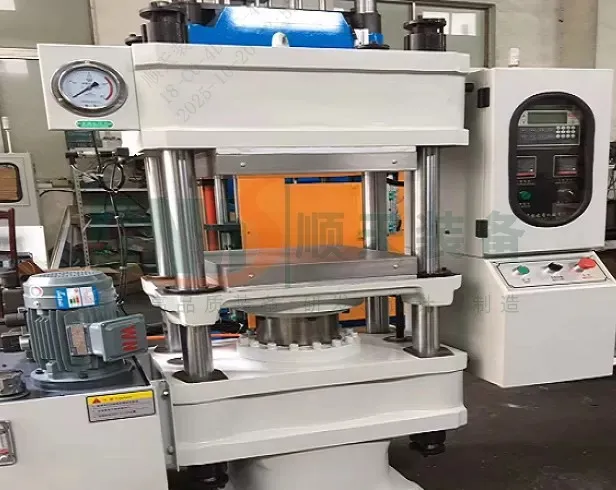
●Hot Pressing/Transfer and 5-Layer Assembly Lamination: During MEA fabrication, the catalyst layer is often transferred onto the membrane, or the gas diffusion layer is bonded to the CCM via hot pressing to form 5-layer or 7-layer assemblies. The MEA servo press, equipped with a heated platen, completes the lamination under precise temperature and pressure control, ensuring uniform bonding and preventing membrane punctures or catalyst detachment.
●Sub-gasket Bonding: Attaching sealing sub-gaskets around the MEA is critical to prevent gas crossover. Servo presses apply very low force (as low as tens of Newtons) for gentle bonding. Integrated with vision systems, they ensure precise alignment without obstructing the flow field. Real-time force and displacement monitoring detect defects like wrinkling or misalignment, enabling 100% in-line quality inspection.
●Final Sizing and Cutting: Some MEAs require cold pressing after lamination to relieve internal stress and ensure dimensional stability. Servo presses maintain a constant force during the holding phase, providing a flat, stable reference for subsequent precision cutting.

2. Precision Bipolar Plate Manufacturing: From Bonding to Seal Installation
Bipolar plates, available in graphite and metal types, involve several pressing steps:
●Bipolar Plate Bonding: Bonding two thin graphite plates with flow channels using adhesive. The servo press applies a consistent, uniform force, ensuring consistent adhesive thickness and maintaining plate parallelism to prevent warping during curing.
●Seal Installation: Precisely pressing pre-formed silicone seals into the designated grooves on the plate. The bipolar plate servo press can be set to a specific press depth while monitoring force. If a seal is twisted or missing, the force deviation is automatically detected.
●Clamping for Leak Testing: At the leak test station, the servo press acts as a highly repeatable clamping mechanism, providing a standardized sealing force to ensure accurate, comparable results.

3. Stack Assembly: Precision Guarantees Performance
Stack assembly is the most critical application for servo presses. The process typically involves:
●Pre-pressing and Alignment: After stacking hundreds of alternating bipolar plates and MEAs, the servo press applies low pressure to seat the layers and ensure initial contact.
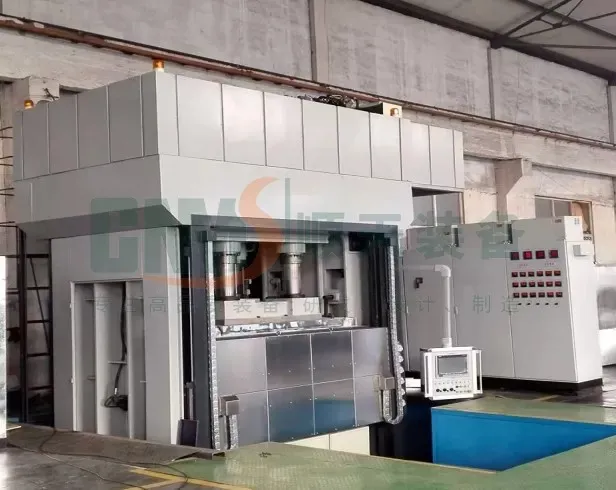
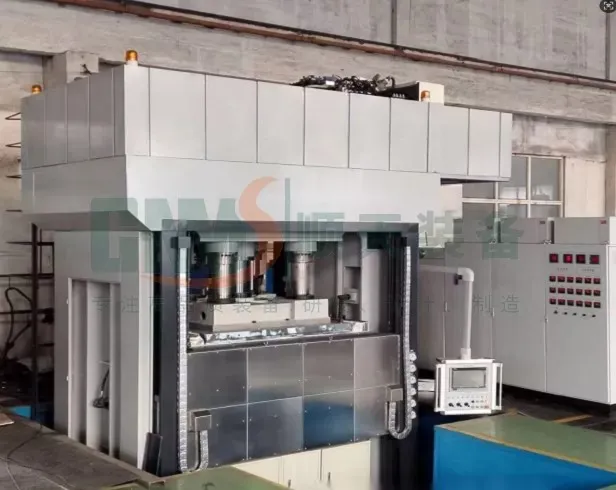
●Final Pressing and Tightening: Under force control, the press slowly applies the target force (e.g., tens of kilonewtons) while monitoring displacement in real-time, generating a force-displacement curve. The system analyzes the curve to detect foreign objects or uneven seal compression.
●Holding and Tightening: Once the target force is reached, the press maintains stable force while operators or automation install the end-plate bolts.
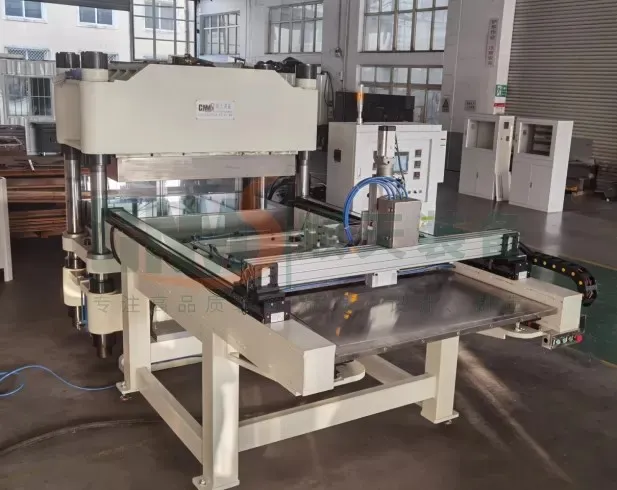
Multi-axis synchronous control is key for large stacks. By linking two or four servo axes, the press platen remains perfectly level throughout the process, with deviation controlled to within micrometers. This ensures uniform force distribution, preventing micro-cracks in the bipolar plates.

4. Fuel Cell System Component Pressing
Beyond the core stack, precision parts within the Balance of Plant also rely on servo pressing:
●Air Compressor Bearing Pressing: Pressing rotor bearings for the air compressor, which involves an interference fit, requires precise control of force and position to ensure bearing life.
●Sensor and Fitting Insertion: Pressing various pressure/temperature sensors and metal quick-connect fittings. Force-displacement monitoring prevents housing cracks or incomplete insertion.
III. Technical Advantages: More Than Just Pressing
Why are manufacturers increasingly choosing electric servo presses? Their core value lies in the following:
1. Full-Process Closed-Loop Force and Displacement Control
Servo motors paired with high-precision sensors achieve force control accuracy of ±0.5% F.S. and displacement accuracy of ±0.01mm. They can seamlessly switch between "force control," "position control," or "hybrid modes" within a single stroke, adapting to different process requirements.
2. Real-Time Quality Monitoring and Data Traceability
The control system generates and compares force-displacement curves in real-time, automatically determining product acceptance. All pressing data can be stored and uploaded to MES, enabling full lifecycle traceability from raw materials to the finished stack, meeting stringent IATF 16949 requirements.
3. High Flexibility
Software recipe functionality allows quick changeovers between parameters for different stack or plate models without mechanical adjustments, significantly improving changeover efficiency for small-batch, multi-variety production.
4. Energy Efficiency and Cleanliness
Fully electric drive eliminates hydraulic oil, preventing contamination and meeting the strict cleanliness requirements of fuel cell manufacturing. Furthermore, energy consumption is only 30%-50% of hydraulic systems, aligning with green factory initiatives.
With their high precision, reliability, and intelligence, electric servo presses are redefining manufacturing standards for hydrogen fuel cells. From core MEA fabrication to final stack assembly and precision sealing, they not only ensure product performance and safety but also provide a solid data foundation for large-scale production. As the hydrogen industry moves towards large-scale commercialization, choosing advanced servo pressing technology will be a key competitive advantage for manufacturers.


 中文
中文