December 08, 2025
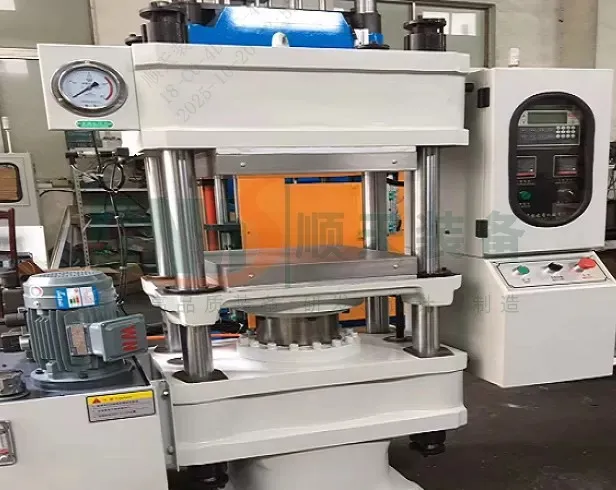
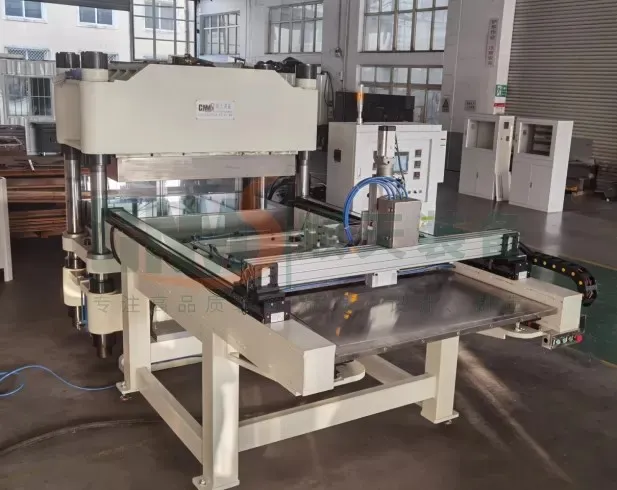
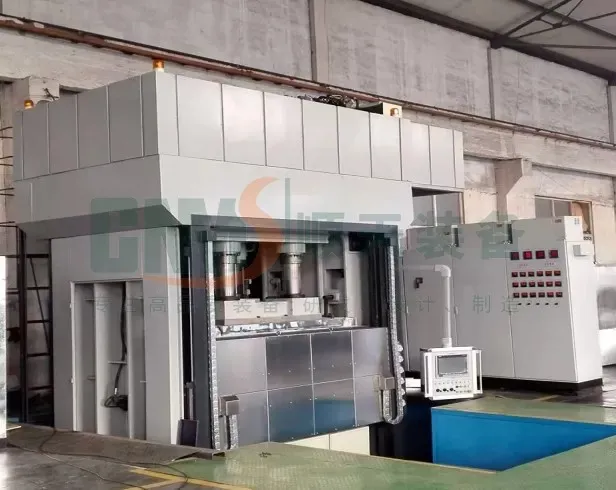
With the widespread application of composite materials in aerospace, new energy vehicles, medical equipment and other sectors, efficient and precise forming processes have become pivotal to corporate competitiveness. The C-type hot press moulding machine, with its unique structural design and outstanding performance, has become indispensable core equipment in composite material production. This article will delve into the advantages, applications and key selection criteria of C-type hot press moulding machines, helping you identify the perfect solution to enhance production efficiency and product quality.
I. Why Choose C-Type Hot Press Forming Machines? Core Advantages Explained
Compared to traditional four-column or frame presses, C-type hot press forming machines demonstrate irreplaceable advantages in composite material processing:
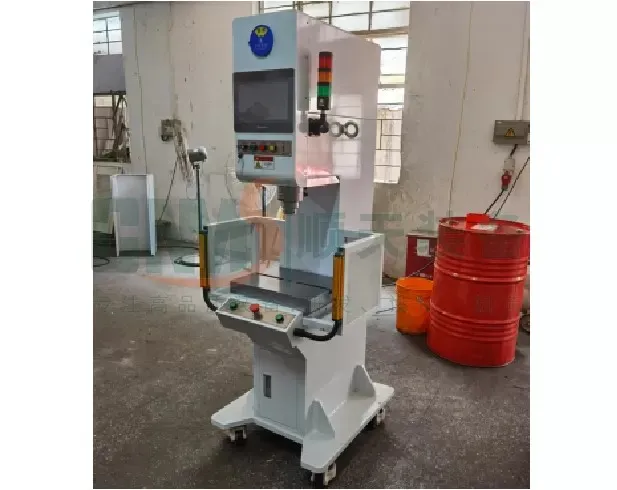
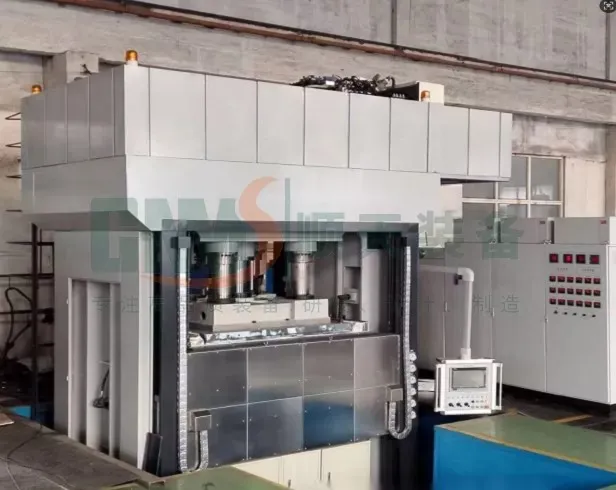
● Open structure for unparalleled operational convenience: The distinctive C-shaped single-arm configuration provides operators with an expansive three-sided working space, facilitating easier mould installation, adjustment, and material handling. This feature is particularly suited to composite production requiring frequent mould changes or complex preform lay-ups, significantly reducing auxiliary time and boosting overall production efficiency.
● High precision and exceptional concentricity: Equipped with a precision guidance system and a rigidly optimised C-frame body, the equipment maintains the movement accuracy of the moving crossbeam and its resistance to off-centre loading even under high pressure. This provides a robust guarantee for the thickness uniformity, fibre orientation control, and consistent resin flow essential for composite moulding, forming the cornerstone for achieving high-quality, repeatable production.
● Integrated thermal pressing capabilities: Modern high-end C-frame presses integrate precise heating systems (typically employing electric or oil-heated temperature controllers), high-response hydraulic systems, and intelligent temperature control modules. This enables rapid heating and accurate control of moulding temperature-pressure curves, meeting the stringent curing requirements of epoxy, phenolic, BMI, and various thermoplastic composite prepregs.
● High spatial efficiency and adaptability: The compact C-frame design occupies minimal floor space, effectively accommodating modern production line layouts. Its flexibility renders the equipment suitable not only for hot pressing but also for composite moulding, laminating, encapsulation, and laboratory R&D applications.

II. Core Application Areas: Empowering High-End Composite Materials Manufacturing
The performance advantages of C-type hot press machines enable their widespread application across multiple high-end manufacturing sectors with stringent material performance requirements:
● Aerospace and Defence: Employed in manufacturing satellite components, unmanned aerial vehicle (UAV) housings, radar domes, and interior panels, meeting the ultimate demands for high strength-to-weight ratios, precision, and consistency in structural elements.
● New Energy Vehicles and Rail Transport: Serves as core equipment for producing critical components such as battery box covers, lightweight body panels, and interior structural parts, directly contributing to enhanced range and energy efficiency.
● Sports and Leisure Equipment: Delivers exceptional mechanical performance and complex shape realisation capabilities in forming high-performance bicycle frames, fishing rods, snowboards, and helmets.
● Medical Devices and Industrial Components: Suited for manufacturing prosthetics, medical bed frames, robotic arms, and similar products, precisely meeting stringent standards for cleanliness, biocompatibility, and structural reliability.

III. Intelligent Upgrades: The Technological Frontier of Modern C-Type Hot Presses
With the deepening of Industry 4.0, intelligentisation has become an unmistakable trend for C-type hot presses:
● Full Closed-Loop Digital Control: Equipped with PLC or dedicated controllers, supporting precise multi-parameter programming of pressure, temperature, time, and displacement. Capable of storing and recalling multiple process recipes to ensure consistency.
● Data Traceability and Monitoring: Real-time collection and storage of critical process data enables full production traceability, providing reliable foundations for quality analysis and process optimisation.
● Safety and Automation Integration: Incorporates multiple protective mechanisms including light curtains and safety interlocks, while offering compatibility with robotic arms and automated feeding systems to facilitate the construction of highly secure automated production cells.

IV. How to Select the Ideal C-Type Hot Press Moulding Machine?
When faced with diverse equipment options, it is advisable to comprehensively evaluate the following key aspects:
1. Define Process Requirements
First, establish core process parameters, including primary material types (e.g., prepregs, SMC), typical part dimensions, and the maximum moulding temperature and working pressure required. This will directly determine the required press tonnage (typically ranging from 15 tonnes to several hundred tonnes), table dimensions, and heating capacity.
2. Evaluate Key Performance Metrics
● Control Precision: Focus on the press's parallelism, repeat positioning accuracy, and temperature control precision (generally within ±1–2°C).
● Hot Plate Uniformity: Strictly control temperature differentials across the hot plates, as this is fundamental to ensuring product consistency and preventing localised overheating or under-curing.
● Energy efficiency and cycle time: Evaluate heating rates, cooling efficiency, and the energy consumption design of hydraulic and heating systems, which directly impact operational costs and production efficiency.
3. Assess reliability and safety
The rigidity of the machine frame material, the brand of hydraulic components, and the stability of the electrical system all affect the equipment's long-term reliable operation. Simultaneously, confirm it incorporates comprehensive safety protections, such as light curtains, interlocks, and overload protection.
4. Prioritise Supplier Expertise and Service
Select suppliers with extensive experience and proven track records in composite moulding. They should not only deliver reliable equipment but also provide invaluable process support, installation training, and timely after-sales maintenance.
In the advancement of composite manufacturing towards efficiency, precision, and intelligence, a high-performance C-type hot press moulding machine transcends being mere equipment for ‘hot pressing’. It becomes the pivotal process hub transforming advanced materials into high-value products. This machine serves as the key driver for enterprises to enhance core competitiveness and propel technological breakthroughs.
Selecting a technologically advanced, dependable C-frame hot press lays the foundation for future product quality, production efficiency, and market responsiveness. Begin planning now to empower your composite manufacturing vision with specialised equipment—pressing excellence, shaping the future!


 中文
中文