January 04, 2026
In the tide of energy transition, hydrogen energy and flow batteries, as the "twin stars" of clean energy, are gradually moving from the laboratory to industrialization. However, the precision manufacturing of their core components—such as membrane electrode assemblies, gas diffusion layers, carbon felts, and separators—has long been a critical bottleneck constraining industrial scaling, cost reduction, and efficiency improvement. Traditional manual or semi-automated processing methods struggle to meet the demands of rapid industrial development in terms of material consistency, machining accuracy, and production efficiency. Today, an automatic cutting line that integrates high-precision cutting, online quality inspection, intelligent material handling, and digital management offers a breakthrough solution to this industry challenge.

Integrated Automation: From "Segmented" Production to "Streamlined" Intelligent Manufacturing
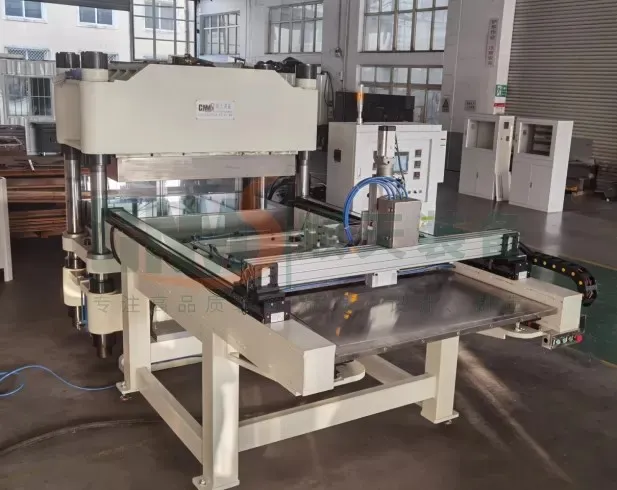
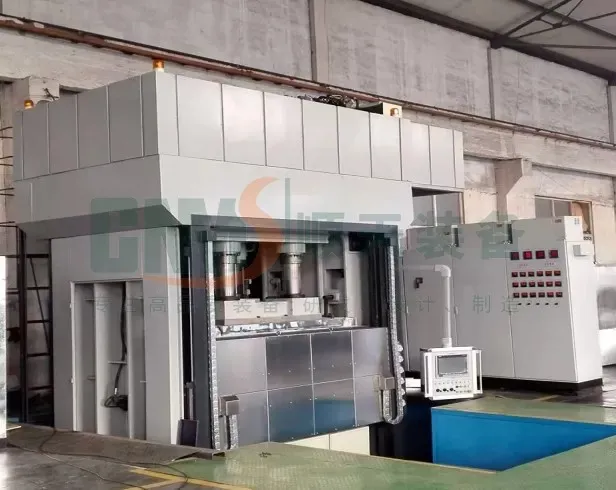
Traditional manufacturing processes often separate cutting, inspection, and handling into discrete stages, resulting not only in inefficiency but also introducing risks such as scratches, contamination, and deformation during multiple material transfers. This fully automatic cutting line adopts a modular integrated design, connecting all downstream processes into a seamless, intelligent production line.
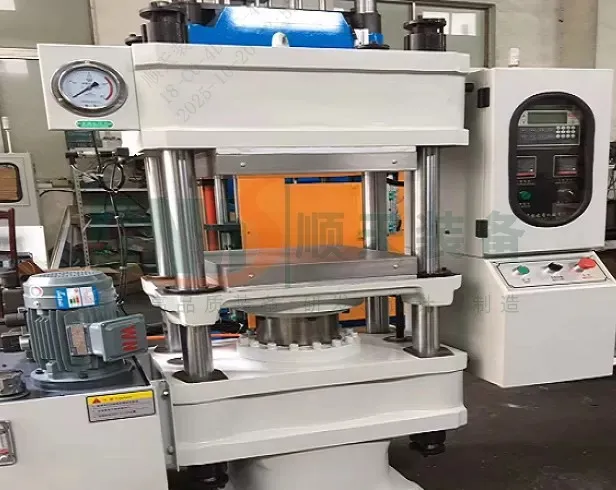
Closed-Loop Core Process: Starting from the unwinding system, the material automatically enters the cutting module. For hydrogen fuel cell components like 3CCM/7CCM membrane electrode assemblies, frames, and gas diffusion layers (GDLs), as well as carbon felts and separators for flow batteries, the equipment utilizes high-precision die-cutting or laser cutting systems to achieve one-step forming of complex shapes. The cut pieces are not simply dropped but are precisely grasped by industrial robots and placed on a vision-alignment platform for correction and positioning, ensuring placement accuracy for every piece. Finally, a stacking system neatly arranges them into material trays and can automatically insert protective interlayers according to process requirements. The entire process is fully automated, eliminating quality fluctuations caused by human intervention.
Online Inspection: Embedding Quality Control into the Production Rhythm
One of the most significant innovations of the automatic cutting line is shifting quality inspection from "post-production sampling" to "real-time full inspection" during the production process, truly achieving "zero-defect manufacturing."
● Dimensional and Morphological Control: Integrated high-precision laser sensors or vision measurement systems instantly measure material thickness, length, and width either before or after cutting. For carbon felts used in flow batteries—a porous, soft, and brittle material—thickness is a critical performance indicator. The equipment's constant tension control system maintains the material under optimal stress during conveying and cutting, avoiding compression or stretching deformation, thereby ensuring thickness uniformity from the source.
● Direct Performance Measurement: More groundbreaking is the integration of an online separator permeability testing unit. For flow batteries, the ion permeability and gas barrier properties of separators are crucial. Traditional methods require sending cut samples to a laboratory for testing, resulting in long cycles and delayed information. Now, permeability testing is directly embedded into the production line. Each separator (or a sampled one) undergoes rapid testing immediately after cutting, with data fed back in real time and linked to the material's "identity information." Non-conforming products are automatically sorted and removed, preventing them from entering the stack assembly process.
● Process Cleanliness Assurance: To address issues like debris and burrs generated during carbon felt cutting, the equipment incorporates automatic cleaning stations (such as negative-pressure dust absorption or roller brushing) to remove attached impurities before stacking, ensuring cleanliness within the battery environment.

Data-Driven: Giving Every Material a "Digital Life"
In the era of smart manufacturing, data is the core of optimization and traceability. The equipment's built-in Information Management System (IMS) acts as its "digital brain," comprehensively recording and managing data across the entire production chain.
● Full-Process Traceability: The system automatically collects and links a "digital profile" for each batch or even each piece of material, including raw material roll numbers, cutting position coordinates, cutting time, measured thickness, permeability test results, robot handling trajectories, and final stacking positions.
● Deep Process Integration: All critical process parameters, such as cutting speeds for different materials, tension settings, laser power, and inspection thresholds, can be managed as recipes within the system. When switching product models, "one-click changeover" is achievable, significantly enhancing flexible production capabilities.
● Seamless System Integration: The equipment is fully compatible with factory-level Manufacturing Execution Systems (MES) and even Enterprise Resource Planning (ERP) systems. Production orders can be automatically issued, while data on capacity, efficiency, and yield rates are uploaded in real time, providing precise support for production scheduling, quality analysis, and cost accounting. If issues are detected in downstream stack testing, the material ID enables rapid reverse traceability to all production parameters and environmental conditions, facilitating precise root cause analysis.
Empowering the Industry: Driving Steady Progress for Hydrogen Energy and Flow Batteries
The value of this integrated solution extends far beyond improving the production efficiency of a single piece of equipment. It empowers the industry at three levels:
● Enhancing Product Consistency and Reliability: Through full automation and comprehensive in-process inspection, quality variations within and between batches are significantly reduced, laying a solid foundation for manufacturing high-performance, long-life battery stacks.
● Reducing Comprehensive Production Costs: While direct labor is reduced, higher yields prevent waste of expensive core materials. Predictive maintenance and digital management also lower operational costs.
● Accelerating Process Development and Iteration: The vast amounts of "process-performance" data recorded by the digital system provide a valuable data trove for R&D personnel to optimize material formulations and improve processing parameters, significantly shortening the cycle from new product development to stable mass production.
From precision cutting to intelligent stacking, from online inspection to data traceability, integrated cutting and inspection equipment is redefining the manufacturing standards for core components in hydrogen energy and flow batteries. This automatic cutting line is not merely an automation tool but also a guardian of quality, a generator of data, and an engine of efficiency. As the clean energy industry rapidly develops, such high-end equipment deeply integrating precision machinery, intelligent sensing, and information technology will undoubtedly become a key cornerstone in overcoming manufacturing bottlenecks and advancing hydrogen energy and flow batteries toward large-scale commercial application, contributing core manufacturing strength to building an efficient and secure future energy system.


 中文
中文